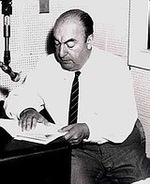
Pablo Neruda
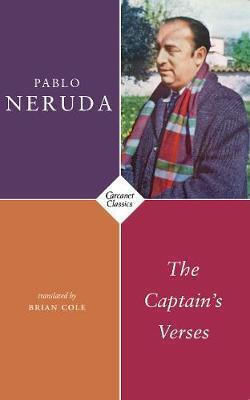
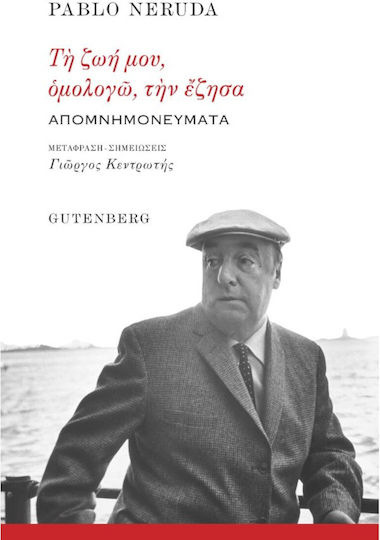
Neftalí Ricardo Reyes Basoalto, known by his pen name Pablo Neruda, was born in 1904 in Parral, Chile. He was one of the most significant and prolific poets of Latin America, with over 30 books to his credit. He joined the Communist Party and was elected as a senator several years later. From 1926 to 1938, he represented his country as a diplomat in various parts of the Far East and Spain, where he witnessed the civil war firsthand. Neruda believed that a poet must engage in public affairs and did not separate poetry from politics. When the Communist Party was declared illegal in 1948, Neruda initially traveled to Argentina and later to the Soviet Union. He returned to Chile four years later and was awarded the Lenin Peace Prize in 1953. Alongside his politically charged poems, Neruda also wrote a large number of personal and intimate poems. The most romantic of these are included in the collection "One Hundred Love Sonnets," dedicated to Matilde Urrutia, with whom he began living in 1955. The Chilean poet's fame spread worldwide, and in 1971, while serving as an ambassador in France, he was awarded the Nobel Prize in Literature. Other notable works by Neruda include "Residence on Earth," "Canto General" (set to music in Greece by Mikis Theodorakis), "The Book of Questions," and "Extravagaria," among others. He passed away in 1973 at the age of 69, and his funeral marked the first public outcry by Chileans against the dictatorship.



 Greek Fiction Books

 Greek Fiction Books