THemos Kornaros
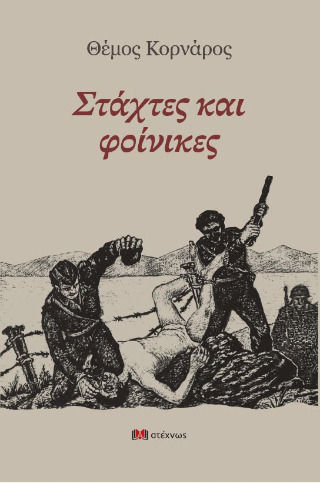
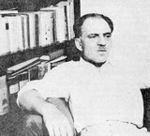
Themos Kornaros (1906-1970). Themos Kornaros was born in Siva, Messara, Crete. Due to his family's poverty, he started working from a young age and traveled across Greece, taking on various manual jobs. When he reached the capital, he attempted to attend university classes but was unable to do so as he was simultaneously working as a laborer on the construction of the National Theatre. There, he met Kostis Bastias and through him, Foto Politis, who enthusiastically received his prose works "Mount Athos" and "Spinalonga" (1933). He continued working as a laborer until 1944, when he was arrested by the SS and imprisoned in the Haidari camp until the Liberation. His hardships continued: he was sentenced to two years in prison due to his text "Charlatans and Thieves in Power" (aimed against an archbishop), arrested in 1947, and exiled until 1952. He resumed his publishing activities after 1955 and by 1960 had published four prose works and two volumes of travel impressions, and edited two anthologies of resistance literature titled "Sacrifices and Laurels of the Greek People" and "Armed Greece." He collaborated with the magazines "Neoi Protoporoi," "Elefthera Grammata," "Epitheorisi Technis," and the newspaper "I Avgi." He traveled to Italy, Switzerland, the Soviet Union, and Balkan countries. He died in Athens during the Papadopoulos dictatorship. [For the last seven years of his life, there is no information, except that he faced financial difficulties as publishing houses did not respect his copyright. The cause of his death remains unclear, and there are no manuscripts of his.] In Crete, he published his first prose work titled "Love or Insensitivity." The prose work of Themos Kornaros is chronologically placed in the Greek literature of the interwar generation. His work is committed, takes the form of a denunciation document, moves within the framework of realistic writing, and directly records the author's personal experiences with a distinctly combative style. Although Kornaros was aligned with the Left, his early works transcended the narrow confines of politics and were dictated by a broader humanitarian ideological orientation. Over time, he moved (mainly after 1935) towards didacticism and strict ideological commitment, yet he maintained the undiminished prowess of his narrative technique. The information was drawn from the entries by Alex. Argyriou, "Themos Kornaros," in "Interwar Prose: From the First to the Second World War (1914-1939) V," pp. 122-134. Athens, Sokolis, 1992; Alex. Ziras, "Kornaros Themos," in "World Biographical Dictionary 5." Athens, Ekdotiki Athinon, 1986; and Fanis Kampanis, "Kornaros Themos," in "Great Encyclopedia of Modern Greek Literature 9." Athens, Haris Patsis, n.d. (Source: Archive of Greek Writers, EKEBI).


 Greek Fiction Books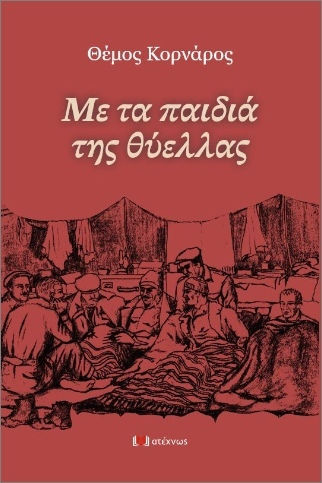
 Greek Fiction Books