Jacques Derrida
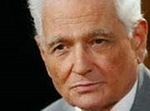
Jacques Derrida was born in 1930 in Algeria. From 1960, he taught philosophy at the Sorbonne, from 1965 at the École Normale Supérieure, and from 1983 at the École des Hautes Études. Derrida's ideas first captured public attention when two of his articles were published in a Parisian journal titled "Critique" in 1965, where he developed his theory on the nature of writing. These articles formed the basis for his first and most famous book, "Of Grammatology," published in 1967. During the same period, he also contributed to the French leftist publication "Tel Quel." From the early 1970s, he divided his time between Paris and New York. He taught at Johns Hopkins University, Yale University, and the University of California. The awarding of an honorary degree to Derrida by the University of Cambridge in 1992 sparked a storm of controversy within the academic community. The debate was so intense that the faculty was compelled to put the issue to a vote. Derrida became known and also faced criticism mainly for developing, in the late 1960s, a new approach to philosophical texts. The so-called theory of "deconstruction" focuses on ambiguity and contradiction in meaning. Derrida concluded that written texts contradict each other and that deconstruction resists the tyranny of easy answers. He participated in campaigns for the defense of immigrants' rights in France, protested against apartheid in South Africa, and supported dissidents in communist Czechoslovakia. His major works include "Writing and Difference" (1967), "Speech and Phenomena" (1967), "Dissemination" (1972), "Positions" (1972), and "The Archaeology of the Frivolous" (1973). He passed away after a battle with cancer (diagnosed a year prior) on October 9, 2004, at the age of 74, in a Paris hospital.