Aris Alexandrou
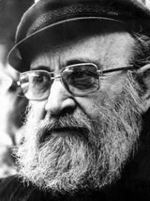
Aris Alexandrou
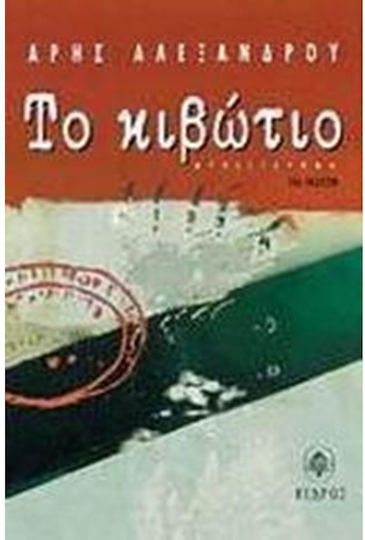
ARIS ALEXANDROU (1922-1978). Aris Alexandrou (the literary pseudonym of Aristotelis Vassiliadis) was born in Leningrad, the son of Vassilis Vassiliadis, who hailed from Trabzon, and the Russian Polina Antovna Vilgemson of Estonian descent. His family language was Russian. After spending two years in Thessaloniki (1928-1930), he settled with his family in Athens, living in a refugee apartment building. In Athens, he learned Greek in elementary school and in 1933 enrolled at Varvakeio High School, where he became friends with Andreas Frangias. Together with Gerasimos Stavrou, Christos Theodoropoulos, and Leonidas Tzefronis, they formed a secret Marxist-oriented group during the Metaxas dictatorship, continuing their activities during the German occupation. In 1940, Aris took entrance exams for the Polytechnic and the School of Fine Arts without success but passed the exams for the Athens University of Economics and Business, which he attended shortly thereafter. In 1941, he joined a communist organization with his comrades, composed of former OKNE members, from which he withdrew a year later. After university courses resumed, he returned to the Athens University of Economics but abandoned his studies a few months later, beginning his long-term translation work at the Govostis publishing house, where he first used the name Aris Alexandrou. Concurrently, he participated in anti-fascist events while remaining unaffiliated with organizations. In 1944, he was arrested by British troops during the Dekemvriana and sent to the El Daba camp in North Africa, returning in 1945. During the civil war, he was exiled to Moudros (1948-1949), Makronisos (1949), and Agios Efstratios (1950-1951). Until 1958, he lived in the prisons of Averoff, Aegina, and Gyaros following a conviction by the Athens Military Court for insubordination. In 1959, he married Kaiti Drosou. Immediately after the imposition of the Papadopoulos dictatorship, he left for Paris, where he did various manual jobs and worked as an editor for the Robert dictionary until 1974, when Greek publishers resumed commissioning translations. Aris Alexandrou died on July 2, 1978, from successive heart attacks at the age of 56. As a translator, he collaborated with other Greek publishers and with the magazines Elefthera Grammata (1946) and Epoches (1963); his writings were published in the magazines Kallitechnika Nea, Kainouria Epohi, Epitheorisi Technis, Epoches, and I Synexeia. His first poetry collection, titled "Still This Spring," was published in 1946. It was followed by the collections "Barren Line" (1952) and "Straight Roads" (1959). He was awarded the Peace Prize at the Moscow Festival in 1962. Aris Alexandrou's work is situated within post-war Greek literature. Through his poetic work, he transitioned from a committed pro-communist discourse to expressing disillusionment with the futility of struggles and irony. However, his novel "The Mission Box," completed in 1972 after seven years of writing and published by Kedros in 1975, is considered a milestone in the history of modern Greek literature. For more biographical details on Aris Alexandrou, see Argyriou Alex., "Aris Alexandrou," Greek Poetry: The First Post-War Generation, pp. 328-330. Athens, Sokolis, 1982, Argyriou Alex., "Alexandrou Aris," World Biographical Dictionary 1. Athens, Ekdotiki Athinon, 1983, Argyriou Alex., "Aris Alexandrou," Post-War Prose; From the War of '40 to the Dictatorship of '67 B’, pp. 136-160. Athens, Sokolis, 1988 and Argyriou Alex., "Chronology of Aris Alexandrou," Diavazo 212, 29/3/1989, pp. 20-24. (Source: Archive of Greek Writers, EKEBI).
0
0