Pantelis Prevelakis
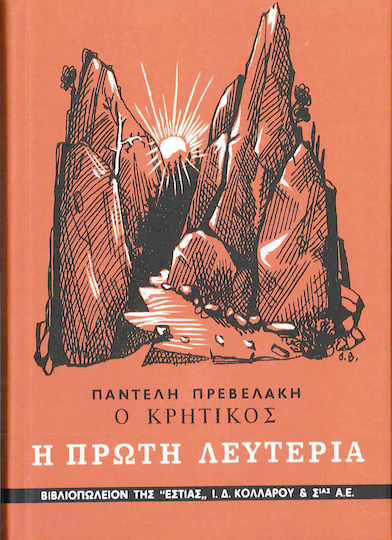
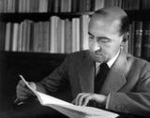
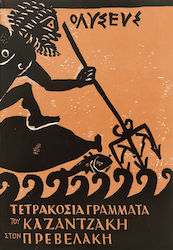
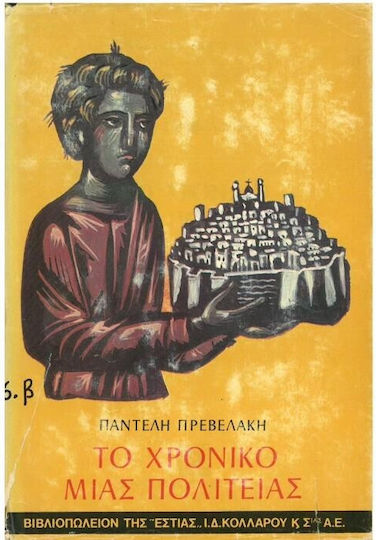
Pantelis Prevelakis (1909 - 1986). Pantelis Prevelakis was born in Rethymno, the second son of Georgios Prevelakis and Irini Frangiadaki. He spent his school years in Rethymno and at the age of fifteen, he co-published the literary magazine Athena with G. Androulidakis, which circulated for a year. In 1926, he enrolled in the Law School of the University of Athens. In Athens, he met Nikos Kazantzakis, with whom he developed a long-lasting friendship. Two years after beginning his studies, he transferred to the School of Philosophy at the University, and in 1930, he went to Paris for further studies. He stayed there for two years, attending courses at the Sorbonne's School of Letters and the Institute of Art and Archaeology, from which he graduated in 1933. Upon returning to Athens, he earned a doctorate in Philosophy from the University of Thessaloniki and was appointed as an adjunct professor in the Department of Art History, but he was never made permanent due to his political ideology in favor of Venizelos. In 1937, he was appointed to the Directorate of Fine Arts at the Ministry of Education, and despite the hostile climate of the Metaxas regime, he was actively involved, particularly in the field of Fine Arts. In 1939, he was appointed as a professor at the School of Fine Arts and had been teaching at the National Theatre School since 1938. After the declaration of war by the Italians, he applied to enlist as a volunteer, and when his application was not accepted, he turned his efforts towards the preservation and safeguarding of the works of the National Gallery and the Ethnological Museum. During the German occupation, he was absent from publishing activities and was dismissed from his positions. After the war, he returned to the University and traveled to many countries. During the Papadopoulos dictatorship, he refused appointments in Secondary Education and honors from the junta, secretly published "Countdown," and released "The New Erotokritos" outside of commercial circulation, and participated in the founding of the Society for Studies of the Moraitis School. After the restoration of democracy, he was honored with the Academy of Athens' Literary Award (1977) and was made an honorary doctor of the Schools of Philosophy at the Universities of Athens and Thessaloniki. He passed away at his home in Ekali from heart failure at the age of 77. In literature, he first appeared in 1928 with the one-act play "The Mime" and the lengthy poem "Soldiers," inspired by the Asia Minor catastrophe. In 1938, he published "Chronicle of a Town," which established him in the prose literature of the Generation of the '30s. In Prevelakis's work, both poetic and prose, the interplay of historical and literary reality dominates, along with a focus on major existential issues of humanity. Throughout his writing career, which spanned thirty-six years of his life, he transitioned from expressing grand visions of freedom to a more introspective writing style, always maintaining a close connection to his initial orientation. For more biographical details on Pantelis Prevelakis, see Stylianos Alexiou, "Prevelakis Pantelis," World Biographical Dictionary 8. Athens, Ekdotiki Athinon, 1988, Manolis Gialourakis, "Prevelakis Pantelis," Great Encyclopedia of Modern Greek Literature 11. Athens, Hari Patsi, n.d., and Nikitas Parisis, "Pantelis Prevelakis," Interwar Prose; From the First to the Second World War (1914-1939) VII, pp. 338-371. Athens, Sokolis, 1993. (Source: Archive of Greek Authors, EKEVI).



 Greek Fiction Books
 Greek Fiction Books
 Greek Fiction Books