Cesare Pavese
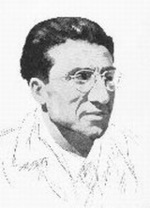
Cesare Pavese is one of the most beloved Italian authors of the generation known as "neorealistic." He was born in 1908 in San Belbo, Cuneo, his father's hometown, where his family, who permanently resided in Turin, would go every year for vacations. His father, descended from small-scale farmers, was a secretary at the court of Turin. His mother came from a family of wealthy merchants. In 1914, his father passed away, and the family responsibilities were taken over by his active and reserved mother. After completing his elementary education, he attended the first grades of high school with the Jesuits at the "Istituto Sociale" ("Social Institute") and the final grades at "Massimo d'Azeglio," where he met Augusto Monti, an anti-fascist professor of Italian and Latin and a friend of Gramsci. Monti, a man of significant political stature and a brilliant educator, played a crucial role in Pavese's development. In 1926, he graduated and sent his first poems to the magazine "Ricerca di poesia" ("Poetic Search"), which were rejected. He taught himself English and studied Whitman. Meanwhile, thanks to Monti, with whom he had developed a friendly relationship, he met Norberto Bobbio, Massimo Mila, Leone Ginzburg, and others. In 1927, he enrolled in philosophy, and in 1930, his mother passed away. That year, he began to study and admire Croce. In 1932, he took his final exams with a thesis on Walt Whitman, influenced by Croce's philosophy, which was initially rejected due to the political conditions of fascist Italy, but with Ginzburg's intervention, it was eventually accepted, and he received his degree. In 1932, he translated Melville's "Moby Dick," Joyce's "A Portrait of the Artist as a Young Man," and Dos Passos' "42nd Parallel."
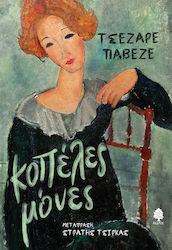
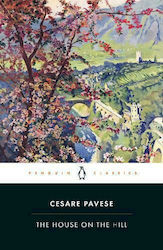
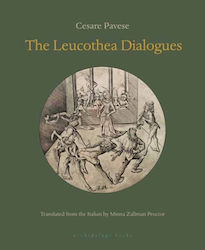
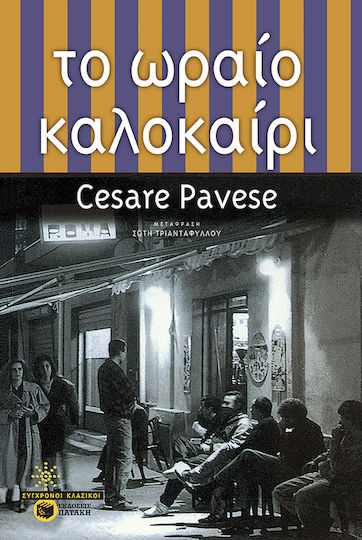
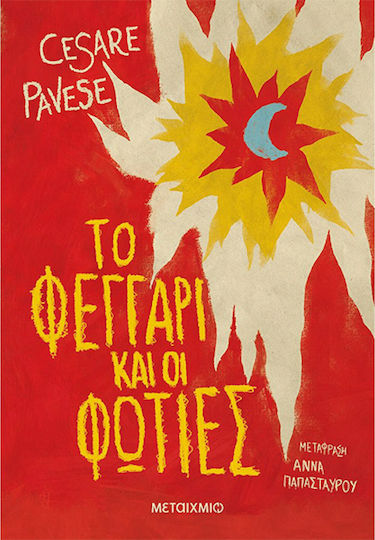
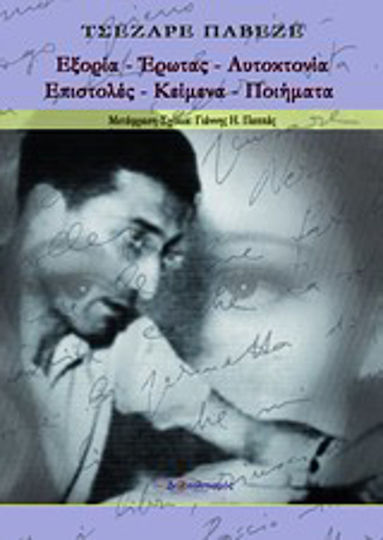
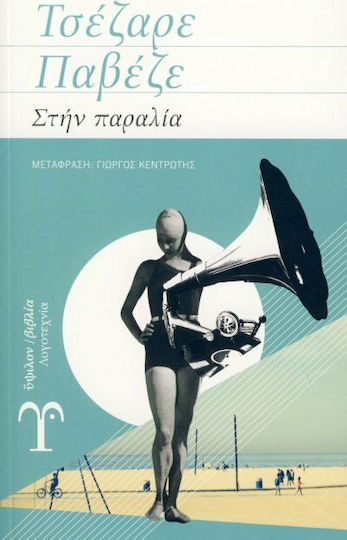
From 1933, along with a group of anti-fascist intellectuals, friends from "Massimo d'Azeglio" high school, he collaborated with the newly established publishing house "Einaudi," and after Ginzburg's arrest, he was called to take over the direction of the journal "La Cultura." In 1935, he was arrested, along with Einaudi, due to a letter from Altiero Spinelli found at his home, but after a plea for clemency, his sentence was reduced. In '36, he returned to Turin, where a romantic disappointment was compounded by the failure of "Lavorare stanca" ("Work is Tiring"). In '41, the publication of "Paesi tuoi" ("Your Countries") was praised by critics. At the same time, he wrote "The Beach." In '43, he was conscripted, but due to asthma, he spent six months in the hospital. During the German occupation, he took refuge in Casale Monferrato with his sister's family, an experience that later inspired "The House on the Hill." After the liberation, he returned to Turin, joined the Italian Communist Party, and began collaborating with "L'Unità," where he met Italo Calvino, among others. In '46, he wrote "Fuoco grande" ("Great Fire"), which was published posthumously, followed by "Dialoghi con Leuco" ("Dialogues with Leuco"), "The Devil in the Hills," "Three Solitary Women," "La luna e i falò" ("The Moon and the Bonfires"). In '50, he was awarded the "Strega" prize. He collaborated with the magazine "Cultura e realtà" ("Culture and Reality"), where an article of his on the theme of myth provoked criticism and misunderstandings in leftist circles. He briefly returned to poetry, and after his death, his poem "Verrà la morte e avrà i tuoi occhi" ("Death Will Come and Will Have Your Eyes") was published. On August 27, 1950, he committed suicide in a hotel in Turin at the age of forty-two.