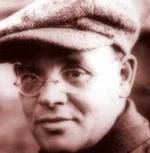
Isaac Babel
Isaac Emmanuilovich Babel was born in Odessa in 1894. He was the son of an agricultural machinery merchant. His first short story was published in 1913, but it was the Bolshevik Revolution and the 1920s, marked by significant and violent social changes across all levels of Soviet life, that left an indelible impact on the young writer. During this period, Babel, like his contemporaries Mayakovsky, Zamyatin, Pasternak, and Bulgakov, found fertile ground to develop his literary persona, liberated from the censorship of the Tsars. A Jew with studies in English, French, and German, he combined the cause of the revolution with literature, writing his first stories in French, influenced by Flaubert and Maupassant. He studied economics in Kiev and later moved to Saint Petersburg, where he formed a close friendship with Maxim Gorky, publishing stories in his magazine "Letopis." In 1920, under the pseudonym Kirill Vasilievich Lyutov, he became a war correspondent on the Polish front. He collaborated with many magazines and newspapers, publishing war reports, short stories, and tales. In 1932, he arrived in Paris, where his wife Eugenia was already residing, and saw his three-year-old daughter Natalie for the first time. In Paris, he met Ilya Ehrenburg, who introduced him to André Malraux, who, in coordination with André Gide, spearheaded Babel and Pasternak's participation in the International Anti-Fascist Writers' Conference in Paris in June 1933. In 1934, Babel publicly and harshly criticized Stalin's regime. In 1935, he collaborated with Eisenstein on the production of the film "Bezhin Meadow." Throughout the interwar period, he published dozens of books of short stories that sold very well. In 1939, he was arrested and imprisoned as a spy for Austria and France, and on January 27, 1940, he was executed in Lubyanka Prison by Stalin's order. His unjust execution remained a closely guarded secret until eight years later, in 1948, when rumors circulated about his potential release. In 1954, he was officially exonerated and vindicated by the Soviet Union, with his death certificate stating he died of "unknown causes."
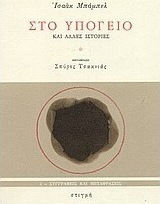
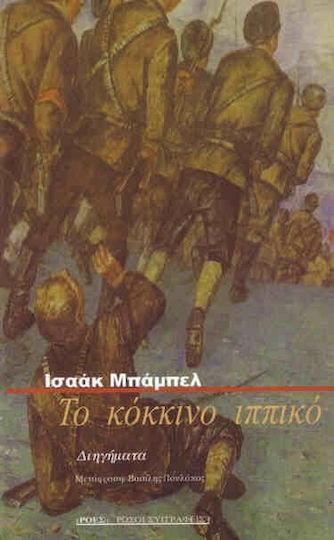
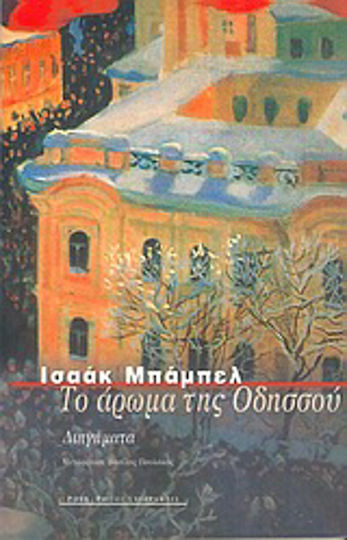
 Greek Fiction Books
 Greek Fiction Books