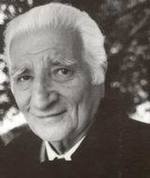
Nikos Mpakolas
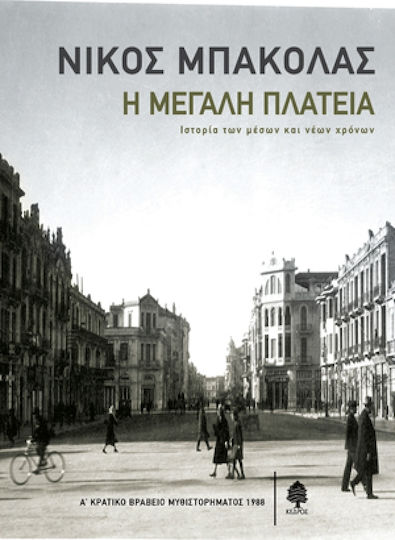
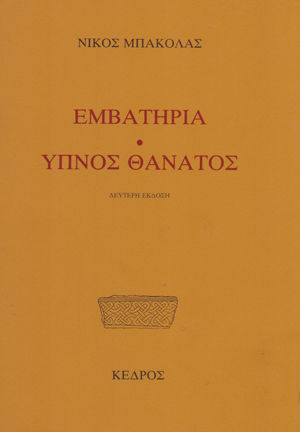
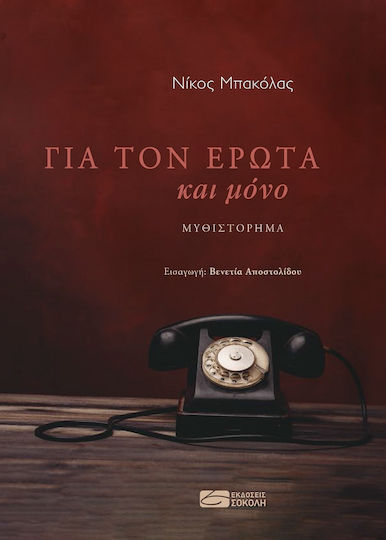
Nikos Bakolas (1927-1999). Nikos Bakolas was born and lived in Thessaloniki, the son of Christoforos Bakolas and his wife Despina. He studied in the Mathematics Department of the School of Physics and Mathematics in Thessaloniki (graduating in 1956) and served his military service in the Air Force (1947-1950). From his student years, he turned to journalism, making his debut in the newspaper "Nea Alitheia" in 1951. Journalism became his primary professional activity. He collaborated with most newspapers in Thessaloniki ("Eleftheros Kirykas", "Makedonia", "Eleftheros Logos", "Thessaloniki", "Nea Alitheia", "Ellinikos Vorras", "Drasis"), where he published translations, articles, and literary essays, and at times served as editor-in-chief and chief editor. He also served as head of the press department of the Thessaloniki International Fair (1959-1967) and, in this capacity, was an informal secretary of the Thessaloniki Film Festival from 1960 to 1965. He was president of the artistic committee, a dramaturgy consultant, and artistic director of the National Theatre of Northern Greece (K.TH.V.E.). He retired from journalism in 1986. He first appeared in literature in 1952 with the work "Variation on a Funeral March," for which he received the second commendation in the novella competition of the magazine "Morfes." Three years later, he began publishing his prose in the magazine "Student Letters" and the newspaper "Pamfoititiki." In 1958, he published his first book titled "Don't Cry, Beloved." He was awarded the Plotin Prize by the magazine "Tomes" (1978 for his work "Mythology"), the first state novel award (1988 for "The Great Square"), and received distinctions for his works "All the People of the Earth" and "Don't Cry, Beloved." Besides prose, Nikos Bakolas also engaged in literary translations, mainly from works of American authors, as well as theatrical criticism (notably, Nikos Bakolas wrote a theatrical play - unpublished and unperformed - "The Red Folder of 1960"). Nikos Bakolas belongs to the Greek prose writers of the post-war generation, specifically to the writers of the so-called modernist tradition of the Thessaloniki school. Influenced by the stream of internal monologue and American prose writers such as W. Faulkner, H. James, and F.S. Fitzgerald, his entire novelistic work revolves around the author's personal mythology of his hometown and its history from 1880 to the present day. His works have been translated into Swedish, German, Dutch, English, French, and Finnish. For more biographical details on Nikos Bakolas, see Panagiotis Pistas, "Bakolas Nikos," in "World Biographical Dictionary," Athens, Ekdotiki Athinon, 1987, and Panagiotis Pistas, "Nikos Bakolas," in "Post-war Prose; from the War of '40 to the Dictatorship of '67," Vol. VI, pp. 56-77, Athens, Sokolis, 1988. (Source: Archive of Greek Authors, E.KE.VI.).


 Greek Fiction Books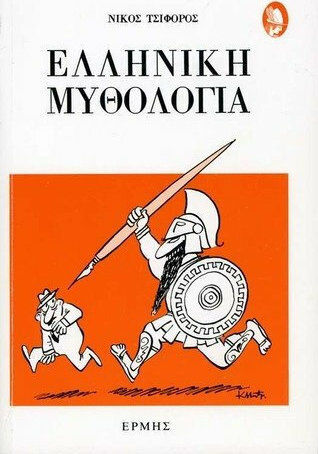
 Greek Fiction Books
 Greek Fiction Books