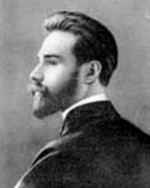
Valéri Brioussov
Valery Yakovlevich Bryusov (1873-1924) was born in Moscow into a family of merchants with serf ancestors. At a very young age, he decided to "introduce" symbolism to Russia and lead this literary movement. Thus, at the age of 21, he published a small poetry collection titled "Russian Symbolists," which served as a declaration of faith in symbolism. However, Bryusov's symbolism also contained two fundamental elements of decadence: Nietzschean individualism and amoral aestheticism.
Bryusov was truly what we call a "monster of education." He passionately studied a wide range of sciences, devouring not just one book after another, but entire libraries. He was incredibly multilingual, mastering numerous languages such as Latin, English, French, German, Armenian, Swedish, Arabic, Ancient Egyptian, and Japanese.
He was not only incredibly knowledgeable but also extremely industrious. He engaged in all forms of writing: he wrote dramas, novels, novellas, literary criticism articles, but primarily poetry. Simultaneously, he continuously translated works by Virgil, Racine, Verhaeren, Goethe, Sayat-Nova, Wilde, Laforgue, Verlaine, Maeterlinck, Hugo, and Poe.
Between 1904 and 1909, he directed the publishing house "Scorpion." He founded the literary review "The Balance," which was the richest literary publication of the time, where, from the very first issues, he wrote almost all the articles himself using various pseudonyms.
Finally, Bryusov gained the much-desired recognition. Talented young poets, like Alexander Blok, became his followers. Gorky described him as the most cultured writer in Russia, and Gumilev as the most European of all Russian writers.
In 1904, Bryusov abandoned symbolism. His poetry took on a classical form where perfect technique soon became entrenched in a cold academicism. The same happened with his prose. He became the target of intense criticism. His peers considered him more of a mathematician than a poet, more of a skilled craftsman than a true creator. Marina Tsvetaeva ironically called him "a hero of work and will," while Leonid Andreyev stated that his verses had the coldness "of a thinking corpse frozen at twenty degrees below zero." In 1910, critic Yuly Aikhenvald wrote a vitriolic article that summarized with the phrase: "Bryusov? He is the Salieri of modern poetry!" This harsh verdict deeply wounded Bryusov.
In 1919, Valery Bryusov became a member of the Communist Party and, from 1919 to 1921, served as the president of the Union of Russian Poets.
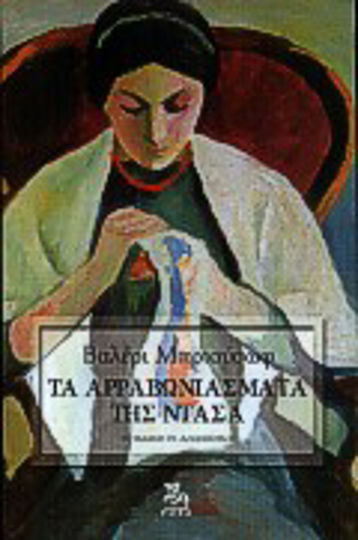 Greek Fiction Books
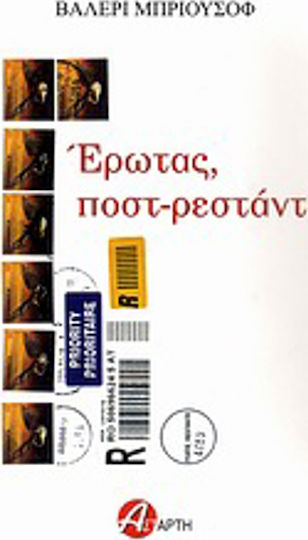
 Greek Fiction Books

Be the first to leave a comment!