George Edward Moore
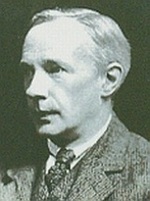
George Edward Moore
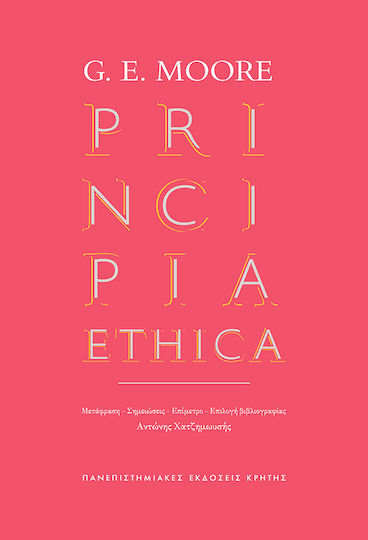
George Edward Moore, brother of the poet T. Sturge Moore, was born in South London in 1873. He began studying classical philology at Cambridge (Trinity College), but under the encouragement of B. Russell and J. McTaggart, a fervent representative of English idealism, he turned to philosophy. In his early study titled "The Metaphysical Basis of Ethics" (1897), he acknowledges the influence of Bradley, an influence he would soon reverse. After his studies and a brief absence from Cambridge, Moore returned to the prestigious university in 1911, where he spent the rest of his life. Editor of the renowned journal "Mind" from 1921, he was elected professor of philosophy in 1925 and taught until his retirement in 1939. He was succeeded by Wittgenstein, with whom he was already acquainted. In fact, the title of Wittgenstein's "Tractatus Logico-Philosophicus" is attributed to Moore, who played a positive role in Wittgenstein's return and appointment at Cambridge. During his academic and philosophical career, Moore formed a long-lasting friendship with well-known members of the Bloomsbury Group (L. Woolf, M. Keynes, among others). He served as president of the Aristotelian Society (1918-1919) and was a member of the secret intellectual society Cambridge Apostles. Moore lived a rather quiet life within the environment of the renowned university and was deeply respected by many prominent figures in the Anglo-Saxon world. Although his works are relatively few, they significantly contributed to the development of analytical philosophy, despite the fact that his philosophical creations were not widely known outside academic circles. His main publications include: "The Nature of Judgment" (1899), "Principia Ethica" (1903), "Refutation of Idealism" (1903), "Ethics" (1912), "A Defense of Common Sense" (1925), "Proof of an External World" (1925).
0