Henry Thoreau
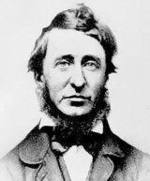
Henry David Thoreau (1817-1862) was one of the most significant visionaries of 19th-century America. He was born in Concord, Massachusetts, and studied classical literature, natural history, and mathematics at Harvard (1833-1837). Later, he taught at various schools, soon finding himself at odds with the authoritarian educational system. From 1838 to 1841, he ran a small school with his brother, and subsequently (1841-1843) collaborated with the magazine "Dial," published by Emerson. A free spirit and a profound philosopher of life, he lived for two years (1845-1847) in the Walden Pond area on the shores of Walden Lake, engaging in a harmonious quest for identity within the undivided unity of nature. In "Walden," published in 1854, he describes his initiation into the higher nuances of spiritual pleasure, reliving the original unity of the world and the spiritual elevation of man, which, in connection with his external environment, transcends the usual malicious disposition towards life. Thoreau also wrote poems, essays, the 14-volume "Journal," and "Resistance to Civil Government," which became better known as "Civil Disobedience" (1849), a work in which he advocates for passive resistance against unjust authority. An opponent of the slave system, he helped many slaves escape. His ideas influenced figures such as Mahatma Gandhi and Martin Luther King in the 20th century.