Edward Gibbon
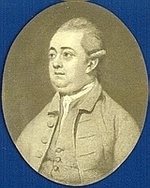
Edward Gibbon lived during the Enlightenment and was a true child of his time. Throughout his life, he was greatly influenced by the major encyclopedists such as Diderot and Helvetius, as well as the restless spirit of Voltaire. He frequented the same clubs as Samuel Johnson, James Boswell, and David Hume. The influence of Enlightenment ideas on Gibbon's inquisitive mind was decisive.
He was born in 1737 in Kent, the sixth child of a relatively affluent and aristocratic family. Initially, he studied at Oxford, but he interrupted his studies and completed them in Lausanne. The reason for the interruption was his sudden and bold decision to convert to the Catholic Church. His stay in Switzerland was pivotal. There, he became acquainted with the profound knowledge of Latin and French authors, which subsequently influenced his work. He also had access to valuable material, such as medieval manuscripts, biblical texts, and other rare documents.
With the outbreak of the Seven Years' War (1759), he enlisted in the British army, where he served until 1763. A year later, he decided to tour Europe with Italy as his final destination. During a visit to the Capitol, he conceived the idea for his work.
The immense success of his book garnered admiration from many prominent figures of his time. However, his references to Christianity sparked a storm of reactions from the Church. The writing of his work was completed in 1787, and the last volumes were published in 1788. Six years later, Gibbon died at the age of 57.
It is notable that he described the Byzantine period by characterizing the Eastern (Byzantine) Empire as a state in a constant and premature decline. Despite the differing views of contemporary historians and the fact that many of Gibbon's opinions have been challenged today, his overall work remains "a bridge between antiquity and the modern era."