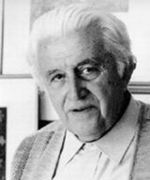
Nikos Gavriil Pentzikis
Nikos Gabriel Pentzikis (1908 - 1993). Nikos Gabriel Pentzikis was born in Thessaloniki as the fourth child of Gabriel Pentzikis and Maria Ioannidou. He had three sisters, one of whom, Chrysoula, was the poet Zoe Karelli. His father was a pharmacist and his mother a teacher. He first attended elementary school in 1919 in the sixth grade, having been homeschooled in previous years. In 1921, he traveled with his family to Budapest, Belgrade, and Vienna. At the age of fourteen, he composed a World Geography, which was initially approved by the Ministry of Education, but the approval was revoked when his age was discovered. It was then that he began writing his first poems. In 1926, he left to study optics and pharmacy in Paris, where he met Yiannis Psycharis, and after two years, he obtained a degree in physiological optics. In 1927, his father passed away, and the family faced financial difficulties. From 1928 to 1929, he studied Pharmacy and Botany at the University of Strasbourg, graduating in 1929. He returned to Thessaloniki and from 1930 to 1955, he took over his father's pharmacy, which became one of the city's most renowned literary hubs. From 1953 to 1969, he worked as a medical representative. In 1933, he visited Mount Athos for the first time (he would return ninety-three times before his death), where he began his engagement with painting. In 1940, he was drafted and trained in Ligourio, but he did not get to fight as the capitulation to the Germans occurred beforehand. In 1943, he joined the Communist Party of Greece. A year later, he participated in a painting exhibition for the first time at Evriviadis Konstantinidis' flower shop. In 1946, he was forced for financial reasons to enter into a partnership at the family pharmacy. In 1948, he married Niki Lazaridou, with whom he had a son, Gabriel. Around 1967, he began a gradual spiritual withdrawal from worldly matters and devoted himself daily to the "Synaxarion" of Saint Nicodemus the Hagiorite, an engagement that lasted until the end of his life and marked his subsequent artistic production. He traveled to the Netherlands, France, Germany, Belgium, England, and Strasbourg (1986 and 1989). As a painter, he participated in solo and group exhibitions in many cities in Greece and abroad (Thessaloniki Chamber of Commerce and Industry (1951), French Institute of Thessaloniki (1952), "Zygos" Gallery in Athens (1958), "Techni" Hall (1960 and 1966), Eighth Panhellenic Exhibition of Thessaloniki (1965), Goethe Institute in Athens (1969), Cyprus (1970), London (1971), "Kreonidis" Gallery (1976), "Kochlias" Gallery (1982), Italy (1984), National Gallery (1985), Vellideio Cultural Center of Thessaloniki (1985), Kilkis (1986), Vafopouleio Cultural Center (1986), and elsewhere). He died of cardiac arrest in 1993. He made his literary debut in 1934 with the novel "Andreas Dimakoudis (a young monk)," signing as Kosmas Stavrakios. From 1935, he began a long-term collaboration with many magazines and newspapers in Thessaloniki ("The 3rd Eye," "Macedonian Days," "Philological Chronicles," "Kochlias" - of which he was a founding member from 1945 -, "The People's Leaf," "Monday," "Our Century," "Forms," "Today's Letters," "Diagonal," "Hinterland," "Responsibility," etc.), where he published prose, poems, translations, and articles. His works have been translated into French, Italian, Dutch, and German. He was honored with the French distinction Palmes d’ Officier d’ Academie (1952), the Silver Cross of the Order of the Phoenix (1971), the title of Grand Archon Myrepsos of the Great Church of Christ (1971), the First State Prize for Novel (1982 for his work "Consolation of the City and Prefecture of Drama"), and the Gottfried - Herder Prize in Vienna (1989). In 1988, he was declared an honorary doctor of the Aristotle University of Thessaloniki. He participated in television talk shows and literary events and gave numerous lectures in Greece and abroad. The literary work of Nikos Gabriel Pentzikis is typically classified within the generation of the '30s, among the pioneering authors who introduced associative writing under the influence of modernism in modern Greek prose. However, he distinguishes himself from his contemporaries mainly due to the intensity with which he embraced and utilized both contemporary literary currents and the tradition of modern Greek prose within the framework of Orthodoxy (as primarily cultivated by Papadiamantis). Some characteristic elements of his multifaceted work include a broad thematic range (stemming from historical, geographical, literary, religious, and other contexts), frequent use of internal monologue and metaphor with references to Byzantine visual art, religious devotion, and a great love for his birthplace. For more biographical details on Nikos Gabriel Pentzikis, see Giorgos Aragi, "Nikos Gabriel Pentzikis," in "Interwar Prose; from the First to the Second World War (1914-1939)," vol. Z, pp. 46-77, Athens: Sokolis, 1993, Gabriel N. Pentzikis, "Chronology of N. G. Pentzikis," in the insert "Seven Days" of Kathimerini, 2/3/1997, pp. 3-7, and updated on the anniversary website of EKEBI: http://pentzikis.ekebi.gr, 2008, Alexis Ziras, Chrysanthos Christou, "Pentzikis, Nikos Gabriel," in "World Biographical Dictionary," vol. 8, Athens: Ekdotiki Athinon, 1988, and Michalis Meraklis, Irini Papakyriakou "Pentzikis, Nikos Gabriel," in "Dictionary of Modern Greek Literature," Athens: Patakis, 2007, pp. 1771-1772.
(Source: Archive of Greek Authors, EKEBI).
In a "typical" text delivered to us, the author autobiographically states:
"I was born in 1908. I only attended school up to the sixth grade, being taught at home. My private tutors instilled in me a love for geography and folk songs. At fourteen, I wrote a World Geography. Subsequently, I began writing personally on the theme of "La Fina" and "Kitsos' Mother." I admired Karkavitsas for his remembrance and exploitation of many of our traditions. As a student in Paris, Norwegian and generally Scandinavian Symbolist literature influenced me, and I began to move on another level. It was then that I read Luigi Pirandello's play "Six Characters in Search of an Author." In Strasbourg, continuing my studies, I was influenced by the Frenchman Claudel. From 1936 onwards, I entered another world with the Byzantine chroniclers. Among the ancient Greeks, because I was never intelligent or clever, apart from Pindar and especially Homer, I relied on no one else. From the beginning, my tendency was towards a mythical and fairy-tale interpretation of worldly matters. The books I published define a series of emotional disappointments. This, moreover, made me an increasingly fanatical servant and imitator of Byzantine authors."
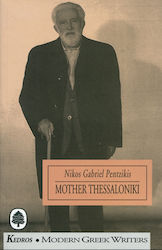
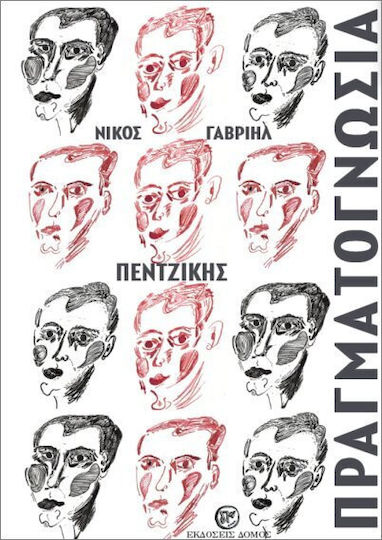
Since 1967, I have been working daily on the Synaxarion of Saint Nicodemus the Hagiorite. I have created a short, medium, and extensive summary of the Synaxarion. From then until today, whatever I attempt to write is based on the numerical and arithmetical processing of the day's synaxarion. The books I have published (and it should be noted that it was rare for a publisher to agree to publish my book, and even rarer for a magazine editor to publish my work) include: "Andreas Dimakoudis," my first novel. In "Andreas Dimakoudis," an image of the erotic alienation of the self is depicted. In "Dead and Resurrection," the alienated and dead self is resurrected through elements of connection with the place. At the same time, I began to engage in painting, learning from Stratis Doukas, Papaloukas, and Hatzikyriakos-Ghikas. In the poetry collection "Images," the meaning is conveyed with the phrase: "Love must teach us to love even the excrement of others." "Pragmatognosia" describes the events of a marriage between a beautiful young girl and a battered sailor with a wooden leg. "The Architecture of a Scattered Life" is an attempt at mnemonic identification of the living and the dead. "The Novel of Mrs. Ersi" was written after I got married. From 1969 onwards, thanks to the exposure given to me by Mr. Savvidis at the Goethe German Institute, my books began to be published frequently. "Escort" is a collection of short stories; "Mother Thessaloniki" consists of prose texts centered on my love for the city where I was born and live. "Towards Churchgoing" is a series of speeches characteristic of my effort to integrate into the church. On a similar level, though not theoretical, are the "Notes of a Hundred Days" and the "Homilies." In "Archive," which is a book of indirect love, the concept of time is dissolved, and my internal mythology is definitively established. Finally, my book "Consolation of the City and Prefecture of Drama" presents an image of mythological perception



 Greek Fiction Books

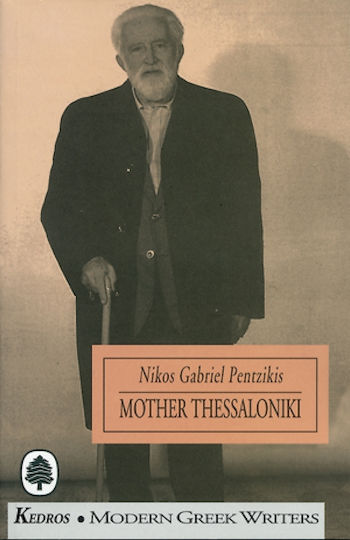
 Greek Fiction Books
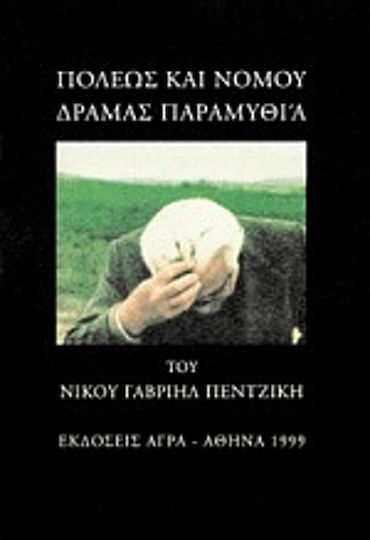 Greek Fiction Books