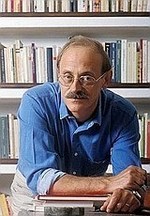
Antonio Tabucchi
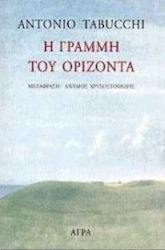
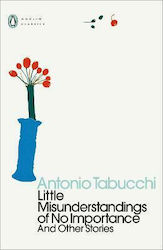
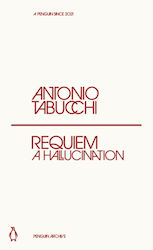
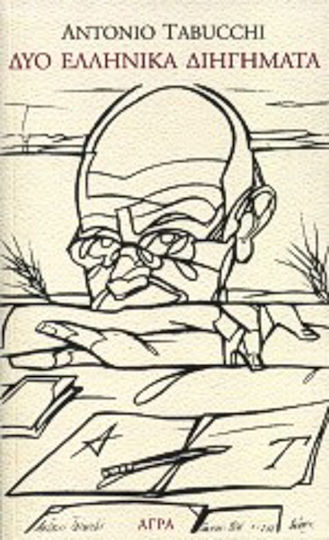
Antonio Tabucchi (1943-2012) was born on September 24, 1943, in Pisa. He studied literature and philosophy in Pisa, Paris, and Lisbon. For many years, he taught at the University of Siena. Tabucchi authored 40 books, most of which have been translated into numerous languages. From a young age, he engaged systematically with Fernando Pessoa, translating a significant portion of his work into Italian. He was also one of the foremost scholars of the Portuguese poet and writer's work, contributing significantly to its global establishment and dissemination. Some of his essays on Pessoa have been published in the volume "The Nostalgia of the Possible: Writings on Fernando Pessoa" (Agra, 2007). He also dedicated a literary work to Pessoa, "The Last Three Days of Fernando Pessoa: A Delirium" (Agra, 1999). His extensive novella "Requiem" (1992) was written directly in Portuguese, while his novel "Pereira Declares" (1994), which brought him worldwide fame, is set in Salazar's Portugal. Although Tabucchi began his writing career with a novel ("Piazza d'Italia," 1975), he was primarily a writer of short forms. From "The Game of Reversal" (1981) to "Time Ages Quickly" (2009), Tabucchi wrote a series of masterful, often minimalist, short stories that gave new impetus to contemporary Italian literature. Between these two collections, he also published the collections "The Woman of Porto Pim" (1983), "Little Misunderstandings of No Importance" (1985), "The Flying Creatures of Fra Angelico" (1987), "The Black Angel" (1991), "Dreams of Dreams" (1992). His extensive novellas/novels include "Indian Nocturne" (1984), "The Line of the Horizon" (1986), "Requiem: A Hallucination" (1992), "The Last Three Days of Fernando Pessoa: A Delirium" (1994), "Pereira Declares" (1994), "The Missing Head of Damasceno Monteiro" (1997), "It's Getting Later All the Time" (2001), "Tristano Dies: A Life" (2004). A cosmopolitan author who traveled constantly, Tabucchi compiled his travel writings in the volume "Travel and Other Travels" in 2011. Tabucchi was a highly politicized writer. He regularly intervened with articles in newspapers, criticizing various issues, particularly during the Berlusconi era. This even led to a significant legal battle in 2010 with the Vice President of the Chamber of Deputies, a member of Berlusconi's party. He staunchly defended the rights of the Roma in Italy (he even wrote the book "The Gypsies and the Renaissance" in 1999). He was also concerned with issues related to democracy and terrorism ("Plato's Gastritis," a book from 1998), and was a founding member of the International Parliament of Writers (1993), which was created to defend writers worldwide who faced threats to their lives in their countries. The Parliament published the magazine "Autodafé," which was released simultaneously in eight languages, including Greek (Agra). Many of his books have been adapted into films. Notable adaptations include "Indian Nocturne" by Alain Corneau, "Pereira Declares" by Roberto Faenza starring Marcello Mastroianni, "Requiem" by Alain Tanner, among others. Cinema has always been a significant point of reference in his work. In his book "20 Photograms," dedicated to the cinema of Almodóvar, he included 11 nighttime photographs by his son Michele Tabucchi (2006). His writings have been adapted for the theater by Giorgio Strehler and others in various countries. He has received numerous international awards, including the Pen Club, Campiello, and Viareggio Repaci in Italy, the Prix Medicis Etranger, Prix Europeen de la Litterature, and Prix Mediterranee in France, the European Aristeion, the Nossack in Germany, the Europaischer Staatspreis in Austria, and the Hidalgo and Francisco Cerecedo in Spain. His candidacy for the Nobel Prize was often discussed. Since 1997, he visited Greece every year at the beginning of summer, either to present his books or to vacation—mainly in Chania, Crete. Chania reciprocated Tabucchi's affection by declaring him an honorary citizen of the city in 2011. A year earlier, in May 2010, he was named an honorary doctor of the Department of Italian Language and Literature at Aristotle University of Thessaloniki. Almost all of his work is available in Greece in new translations by Antaios Chrysostomidis (who was awarded the State Translation Prize in 2003 for translating the novel "It's Getting Later All the Time"). He shared a close friendship with Antaios Chrysostomidis, which is reflected in their book of conversations, "A Shirt Full of Stains" (1999), as well as in the filming of the television episode of the series "Antennas of Our Time" for ET1 (2007). He was married to the Portuguese Marie-José Lancastre, also a scholar and translator of Pessoa, with whom he had two children. He passed away on March 25, 2012, at the age of 68, after a prolonged illness, in Lisbon, a city he chose as his second home and which frequently appears in his work.
(Source: Agra Publications)



 Greek Fiction Books
 Greek Fiction Books
 Greek Fiction Books
 Hobbies & Leisure Books
 Greek Fiction Books