John Maynard Keynes
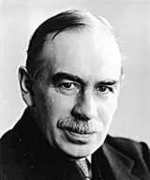
John Maynard Keynes
John Maynard Keynes (1883-1946) was born in Cambridge, Great Britain, on June 5, 1883. His father was a lecturer at the University of Cambridge, and his mother worked as a social worker. With the support of his parents, who had great faith in the abilities of their firstborn son, Keynes won a scholarship to Eton College, where he studied mathematics and history. In 1902, he transferred to King's College, Cambridge, where his interest turned exclusively to mathematics. After graduating, he worked for a period at the India Office, but in 1908 he returned to Cambridge to study economic and philosophical theories, encouraged by the famous economist Alfred Marshall. Soon, he began publishing articles in reputable journals, and in 1913 his first book, "Indian Currency and Finance," was published. In 1911, he became the editor of the "Economic Journal," and during World War I, Keynes worked as the secretary of the Royal Economic Society, a position that allowed him to attend the Versailles Treaty conference. After the war, his studies focused on the exploration of probability theory, and in 1919 he published "The Economic Consequences of the Peace," considered one of his most significant works. During the Great Depression, Keynes made substantial contributions to addressing the crisis by collaborating with various organizations, and in 1936 he published "The General Theory of Employment, Interest, and Money." He continued to work on his economic theories even during World War II, and in 1942 he was honored by the House of Lords for his overall contributions. He passed away in 1946. Today, he is undoubtedly regarded as one of the most important economists of the modern era and was recently named the economist of the millennium in a survey among economists. (Source: "To Vima" newspaper)
0