Bertrand Russell
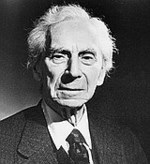
Bertrand Russell
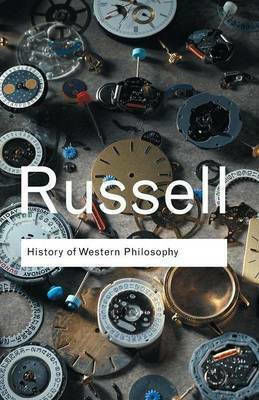
British philosopher (1872-1970). He was born near the banks of the Wye. After receiving an excellent education, he became a professor at Trinity College, Cambridge, and a member of the Royal Society in 1909. In 1916, he resigned from his professorship due to his pacifist beliefs. After World War I, he traveled to Russia and China, where he ran a private school from 1927 to 1932. He also taught for many years in the United States. He returned to Cambridge in 1944 and resumed his duties as a professor. Throughout his long career, which was marked by the Nobel Prize in 1950 and the British Order of Merit, Russell made significant contributions as a mathematician, philosopher, and sociologist. His extensive body of work includes titles such as "Principia Mathematica" (1903), "The Problems of Philosophy" (1912), "Our Knowledge of the External World and Scientific Method" (1914), "The Road to Freedom: Socialism, Anarchism, and Syndicalism" (1918), "Mysticism and Logic" (1918), "Bolshevism" (1940), "Marriage and Morals" (1929), "The Conquest of Happiness" (1930), "A History of Western Philosophy" (1946), among others. A supporter of women's emancipation and suffrage, the philosopher of peace viewed humanity as a unified whole and opposed Nazism, which he fought against during World War II, writing powerful pages against it. Russell dedicated his influence to the cause of world peace and opposed the use of atomic energy for military purposes. He believed in humanity, and his optimism for the future is evident throughout his work. He passed away in February 1970.
0