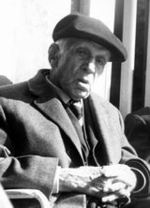
Kostas Varnalis
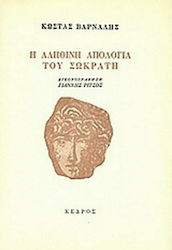
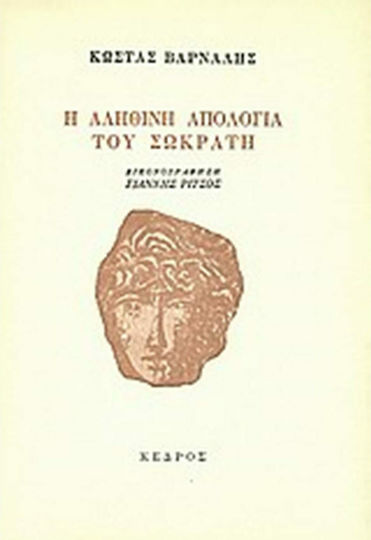
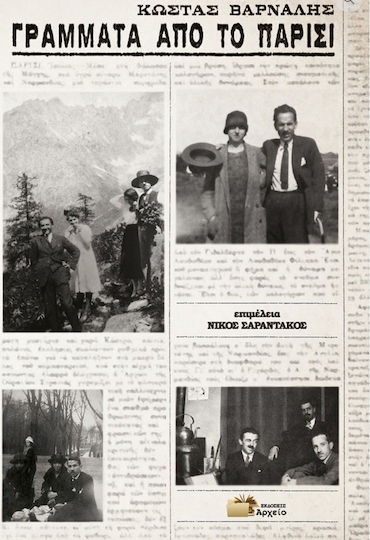
Kostas Varnalis (1884-1974). Kostas Varnalis was born in 1884 in Pyrgos, Bulgaria (then Eastern Rumelia), where he experienced the atmosphere of the Greco-Turkish War of 1897. In 1898, he completed Greek School and enrolled in the Zarifeia Teacher Training School. He finished his general studies in 1902 and was appointed as a teacher at the Pyrgos school at the age of eighteen. That same year, he left for studies in Athens with a scholarship from the Nikolaos Paraskevas legacy from Varna. He attended the Faculty of Philosophy and participated in the Language Question debate as a supporter of the demoticists. In 1907, he took part in founding the poetry magazine Hegeso, which published ten issues. In 1908, he graduated from the Faculty of Philosophy and was appointed a Greek teacher in Amaliada. From there, he sent the poem Sacrifice to the magazine Nea Zoe in Alexandria. After the magazine refused to publish it, members of Nea Zoe left and created the magazine Grammata, where Sacrifice was published. Three years later, he became a school principal in Argalasti, Pelion, and after accusations against him for involvement in the Atheist Affair of Volos, he was transferred to Megara. After the Second Balkan War, in which he participated with the "exempted and untrained of 1900-1902," he attended the Glinos Secondary Education Teacher Training School and in 1915 was appointed school principal in Keratea, Attica. From 1910, he began engaging in literary translation and by 1916 had completed translations of Euripides' Heracleidae, Sophocles' Ajax, Xenophon's Memorabilia, and Flaubert's The Temptation of Saint Anthony. In 1916, he was conscripted again, this time in Lemnos (following the end of Bulgarian neutrality). In 1917, he was appointed a teacher at Piraeus High School, and in 1919 he left with a scholarship for further studies in aesthetics and modern Greek literature in Paris. His stay there marked his ideological alignment with Marxist dialectical materialism, resulting in the poem Pilgrim. After the fall of the Venizelos government, his scholarship was cut off, and Varnalis returned to Athens, where in early 1921 he was appointed a teacher at the Third High School of Piraeus. That summer, he wrote The Burning Light in Aegina, which he published a year later in Alexandria under the pseudonym Dimos Tanalias (a second revised edition was made in 1933). In 1922, he also published The Fated in the magazine Neolaia and Freedom in the magazine Mousa. In the fall of 1923, after the reinstatement of his scholarship, he returned to Paris, where he stayed at the home of his friend, engraver Yiannis Kefallinos. In 1924, he returned to Athens and taught modern Greek literature at the Pedagogical Academy under the direction of Glinos. A year later, Varnalis had a critical dispute with Yiannis Apostolakis. Varnalis published the essay Solomos Without Metaphysics, opposing the idealistic poetic theory expressed by Apostolakis in his work Poetry in Our Life. In 1926, he was dismissed from his position as a professor at the Pedagogical Academy, initially temporarily and then permanently, following a publication in Estia that used an excerpt from The Burning Light as an example of the anti-national actions of reformist educators. Varnalis turned to journalism and went to France as a correspondent for Proodos. In 1927, he returned to Athens and published The Besieged Slaves. In 1929, he married the poet Dora Moatsou. In 1932, he published "The True Apology of Socrates." In 1935, he participated as a representative of Greek writers at the Congress of Soviet Writers in Moscow, alongside Glinos, and following Kondylis's orders, he was exiled to Mytilene and Agios Efstratios. He remained faithful to his ideology during the German occupation and the civil war. In 1956, he was honored by the Society of Greek Writers, and in 1959, he received the Lenin Prize. His works, including "Living People," "Penelope's Diary," "Poetic Works," "Dictators," and "Aesthetic-Critical" (two volumes), had been published earlier. In 1965, his last poetry collection titled "Free World" was published, and in 1972, the play "Attalos III" was released. He passed away in December 1974. After his death, his poetry collection "People's Wrath," written during Papadopoulos's dictatorship, and "Philological Memoirs," a compilation of his publications in the newspaper "Independent" from February to August 1935, were released. Varnalis's journey in poetry began in 1904 with the publication of "Kerythres," his first poetry collection, introduced by Stefanos Martzokis. In his early steps, he intellectually aligned with Angelos Sikelianos and Nikos Kazantzakis, heavily influenced by the Parnassian movement and Dionysian and humanistic ideas. With "The Pilgrim," he transitioned to a new ideological direction, adopting a messianic model of poetic identity, while "The Burning Light" marked his final ideological shift towards socially and politically engaged literature, incorporating satirical, lyrical, dramatic, and symbolic elements. This last orientation accompanied him throughout his life and is prevalent in his critical writings. Overall, Varnalis's work reflects his receptiveness to new ideas, and the coexistence of contrasting elements in his work is one of the reasons for its unique charm. For more biographical details on Kostas Varnalis, see Malanos Timos, "Varnalis Kostas," Great Encyclopedia of Modern Greek Literature 12, pp. 731-738. Athens, Haris Patsis, n.d., Michailidis Theano N., "Varnalis Kostas," World Biographical Dictionary 2. Athens, Ekdotiki Athinon, 1984, and Papageorgiou Kostas G., "Chronological Work-Biography of Kostas Varnalis," Diavazo 88, 22/2/1984, pp. 6-11. (Source: Archive of Greek Writers, E.KE.VI.).
 Greek Fiction Books
 Greek Fiction Books
 Greek Fiction Books
 Greek Fiction Books