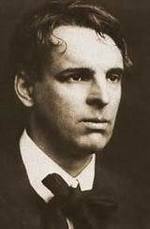
William Butler Yeats
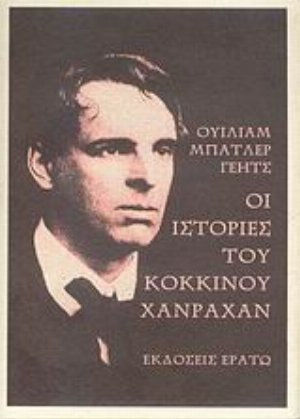
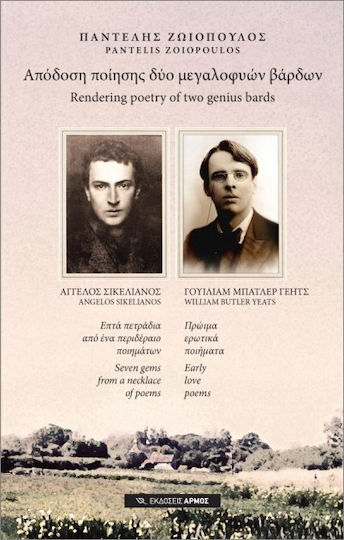
The poet William Butler Yeats, son of John Butler Yeats and Susan Pollexfen, was born in Dublin on June 13, 1865. His father, who had studied law but became a painter, was a skeptical intellectual, a follower of John Stuart Mill's rationalism, and a brilliant conversationalist. His mother was a simple religious woman who enjoyed listening to and telling stories about fairies and ghosts. In 1867, the Yeats family moved to London, where his father began his career as a painter. In London, William attended classes at Godolphin School for a few years. Things were quite difficult for him there. Being a dreamer, he couldn't concentrate on his studies, and his classmates mocked him because he wasn't strong and wasn't English. In 1880, the family returned to Ireland. There, William attended classes at Erasmus High School in Dublin until the age of eighteen. His behavior began to take on a distinctive character. Trying to cover up his great shyness, William started adopting a Byronic "pose" and imitating the "heroic stride" of Irving in "Hamlet" (he had seen the performance with his father). If at the previous school in London he had suffered quite a bit from the mockery of his classmates, now he went on the offensive and became a "difficult" young man. To his father's great disappointment, who wanted his son to follow the family tradition and study at Trinity College, he enrolled and attended painting classes at the Metropolitan School of Art in Dublin. There, he met a fellow student, George Russell (the poet who wrote under the pseudonym "AE"), who shared and encouraged his interest in the supernatural and the occult. In this strange man, Yeats found a worthy counterpart to his father and a spiritual and moral stance that defied rationalism. Together with Russell, they devoted themselves to the study of Eastern religions and European magic, and even founded, along with others, the "Hermetic Society of Dublin," which first convened in 1885 with Yeats as president. William began writing poetry while also taking a keen interest in poetic theater. In 1885, two of his lyrical poems were published for the first time: "Song of the Faeries" and "Voices," as well as the lyrical drama "The Island of Statues" in the "Dublin University Review." Yeats's poetry initially revealed various influences (e.g., from Shelley or the Pre-Raphaelite poets, whom he had known through his father), but he had a specific direction: he wanted to write about the Irish and their homeland, his own homeland. Thus, he borrowed elements from the fairy tales and legends of his land, using the form of the ballad ("Crossways," 1889; "The Rose," 1893) or writing narrative poetry ("The Wanderings of Oisin," 1889), where the Irish material is presented in a Pre-Raphaelite style and symbolic method. With the publication of another poetry collection ("The Wind Among the Reeds," 1899), his poetry began to become more complex. Yeats had met Arthur Symons, who, with the poet's help, wrote "The Symbolist Movement in Literature" (1899). Symons introduced Yeats to the Mallarmé movement. Yeats, however, never ceased to be interested in a purely Irish artistic production. The result was the founding of the Irish Literary Theatre, the Irish national theatre that later became known as the Abbey Theatre. In this endeavor, he collaborated with Edward Martyn, George Moore, and Augusta Gregory. In 1914 and 1919, his poetry collections "Responsibilities" and "The Wild Swans at Coole" were published, respectively. In 1925, he published a work titled "A Vision," but eventually withdrew it, rewrote it, and in 1937, released it in its new form. This work is a semi-astrological system that explains human types, history, and the soul's journey after death, using the cyclical perception of time and the twenty-eight phases of the moon as a central reference point. In 1928, he published the collection "The Tower," and in 1930, he wrote the play "The Words upon the Window-pane." He also wrote works such as "The King of the Great Clock Tower," "The Winding Stair," "Wheels and Butterflies," "A Full Moon in March," "Essays 1931-1936," "Purgatory," "The Death of Cuchulain," among others.
In 1923, he was awarded the Nobel Prize in Literature. Yeats died in France on January 28, 1939, believing that if a person cannot know the absolute truth, they can at least embody it. The day of his death was, as W.H. Auden said, "a dark and cold day"; the "Irish vessel" was left "empty of his poetry."
However, in his work, Yeats had challenged the authority of death:
"It's time to write my testament...
and here I declare my faith:...
death and life and all
were created by a man
from his bitter soul, all,
yes, and sun and moon and stars,
and also added this,
that the dead rise
and dream..."

 Greek Fiction Books
 Greek Fiction Books
 Greek Fiction Books
 Poetry Books