Nikos K. Nikolaidis
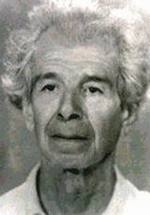
Nikos K. Nikolaidis
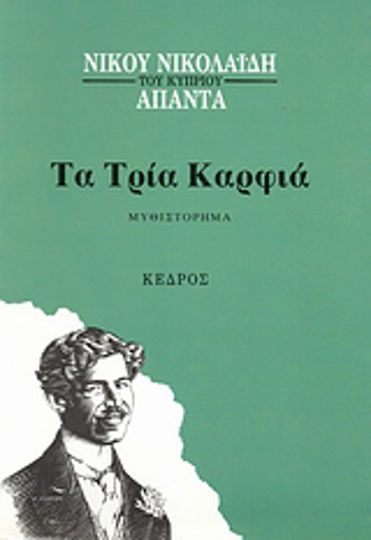
Nikos Nikolaidis (c. 1884-1956). Nikos Nikolaidis was born in Nicosia, the eldest son of Konstantinos Nikolaou and his wife Irini. He lost his parents at the age of six and was raised by an aunt. Due to financial hardship, he began working as a child, which limited his formal education to the fourth grade of primary school. Initially, he apprenticed at a bookbinding shop and later turned to iconography, which he pursued professionally, undertaking church and monastery illustrations, portraits, landscapes, models, and decorations on commission. In 1907, he spent a few months in Athens, where he attended classes as an auditor at the School of Fine Arts, and subsequently traveled to countries in Europe, the Middle East, and Africa, funding his travels through his art. After his travels, he lived in Athens (1915-1919), Limassol (1919-1923, as a drawing teacher at the Private School of Foreign Languages and Greek Studies and collaborator of the magazine "Avgi"), and finally in Cairo, where he wrote and published most of his literary work and died at the Cairo Community Hospital. Nikos Nikolaidis made his literary debut in 1908 in Athens with the publication of the narratives "Prayer" and "The Bonds" and the poem "The Anemones of the Rock" in the magazine A.O.D.O. ("From All for All") by Vlasis Gavriilidis. During that period, he also collaborated with magazines such as "Panhellenic Review," "New Life," "Serapion," "Letters," "Altar," "New Review," "Cypriot Letters," and the newspaper "Acropolis," initially publishing texts in Katharevousa and later in Demotic Greek. He also came into contact with the circle of Konstantinos Christomanos and participated in the founding of the cultural association "The Action." His first official appearance in the literary world was in 1919 with the publication of the dream drama "The Blue Flower," which was successfully staged by the Emilios Veakis - Christoforos Nezer troupe in Alexandria four years later, with sets and music by Nikolaidis himself. This was followed by publications of poems, short stories, and novels, initially in Cyprus and later in Cairo. His works were translated into French, Italian, and Romanian. Nikos Nikolaidis belongs to the interwar generation of modern Greek literature. During his lifetime, he was enthusiastically received by critics. His early theatrical work "The Blue Flower" is characterized by a tendency to escape reality through lyrical elements and verse writing. His poetic prose works are influenced by the literary movements of aestheticism and exoticism, while in his last collection "The Book of the Monk," he turns to satirical verse with a sharply caustic tone. His prose retains the musical dimension of poetry, and his writing, realistic in its general framework with elements that transcend reality, is distinguished mainly by the clarity of language and the acute psychological insight of the author into the subconscious of his characters. In "The Crooked Wood" (1922), we first encounter Nikolaidis's strong tendency to incorporate autobiographical elements into his works, as well as to imbue them with a dimension of social concern and didacticism, an effort that was mainly fulfilled in his last work, the novel "The Three Nails." For more biographical details on Nikos Nikolaidis, see Manolis Gialourakis, "Nikos Nikolaidis," in "The Great Encyclopedia of Modern Greek Literature," vol. 10, Athens: Haris Patsis, n.d.; Stavros Karakasis, "The Life and Work of Nikos Nikolaidis," Athens, Spiritual Cooperation Agency, 1953; Aristides Koudounaris, "Nikos Nikolaidis," in "Biographical Dictionary of Cypriots 1800 - 1920," Nicosia, 1995 (3rd edition); Nikos Kranidiotis, "Nikos Nikolaidis," in "World Biographical Dictionary," vol. 7, Athens, Ekdotiki Athinon, 1987; Kostas Nikolaidis, "Chronology of Nikos Nikolaidis (1884-1956)," "New Era," vol. 211 (Nicosia), 11-12/1991, pp. 5-16; and Anna Katsigianni, "Nikos Nikolaidis," in "Interwar Prose: From the First to the Second World War (1914-1939)," vol. 6, pp. 226-248, Athens, Sokolis, 1993. (Source: Archive of Greek Authors, EKEBI).

0
0
0

0
 Greek Fiction Books
Ανθολογία Ελληνικού Διηγήματος του 20ού Αιώνα
Collective Work, 2009 , Cover: Hard , Kastaniotis Editions
from24,86 € at 5 stores0