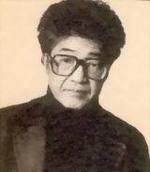
Köbö Abe
Kobo Abe was born in Tokyo in 1924 and grew up in Mukden, Manchuria, where his father, a doctor, worked at the Medical School. Early on, he developed an interest in mathematics and insect collecting, as well as the works of Poe, Dostoevsky, Nietzsche, Rilke, Heidegger, Jaspers, and Kafka. He received a medical degree from the Imperial University of Tokyo in 1948 but never practiced as a doctor. For a time, he was a member of the Japanese Communist Party and collaborated with the Marxist literary magazine Kindai bungaku (Modern Literature).
In 1947, he self-published the book "Anonymous Poems," and in 1948, his first novel, "The Road Sign at the End of the Road." In 1951, he was awarded Japan's most prestigious literary prize, the Akutagawa Prize, for his book "The Wall - The Crime of Mr. S. Karma." Shortly thereafter, he received the Postwar Literature Prize for his short story "The Red Cocoon." This was followed by many novels, plays, and science fiction books. His works show affinities with Beckett, Sartre, Kafka, and Primo Levi.
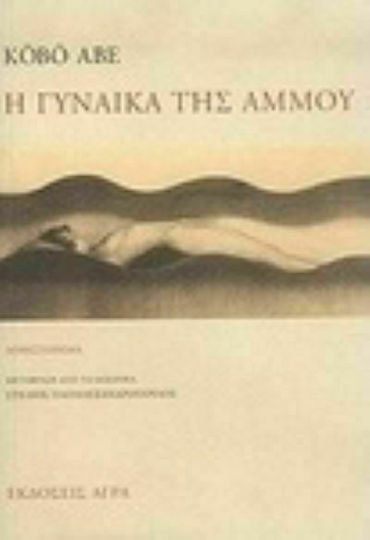
His novel "The Woman in the Dunes" was published in Japan in 1962 and translated into many languages. In 1963, it won the Yomiuri Literary Prize. The film directed by Hiroshi Teshigahara in 1964 won the Critics' Prize at Cannes. In 1967, "The Woman in the Dunes" was honored in France with the Best Foreign Novel award.
Kobo Abe passed away in Tokyo in 1993.