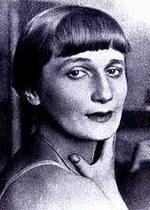
Anna Akhmatova
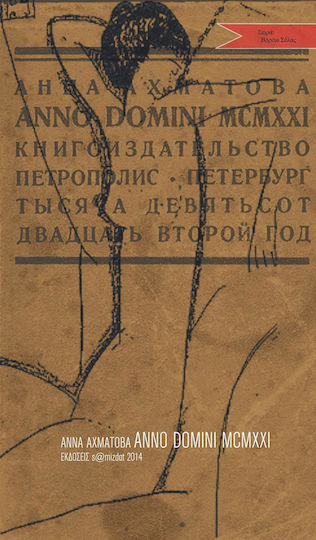
Anna Akhmatova (pseudonym of the Russian Anna Andreevna Gorenko) was born in 1889. Alongside Osip Mandelstam, she led the Acmeist movement, which, in contrast to the Symbolists, sought for poetic language to convey precise meanings. Her first poetry collection, titled "Vecher" (Evening), was published in 1912, followed by works such as "Chetki" (The Rosary, 1914) and "Anno domini MCMXXI" (1922). Her voice, however, was silenced by the new Soviet regime, which disapproved of her work. From 1922, for eighteen long years, the regime banned her from publishing poetry, condemning her to silence and isolation. In 1946, she was expelled from the Writers' Union, and her son Lev was also persecuted and imprisoned for many years. The situation began to change after the 20th Congress of the Communist Party of the Soviet Union in 1956. Her major lyrical cycle "Poem Without a Hero," which she worked on for twelve years, was published abroad in 1962, and her masterpiece "Requiem" followed a year later in Munich. "Requiem" (1935-1940) was published in the Soviet Union in 1987, as its theme, an elegy to the prisoners of the Stalinist regime, was considered controversial. During the last decade of her life, she wrote several poems, including the autobiographical "Poema bez geroya" (Poem Without a Hero, 1962). Toward the end of her life, she was honored with the Etna-Taormina Prize (1963) and received recognition from the University of Oxford (1965). She passed away in 1966. Akhmatova is among the poets who transcended symbolism and mysticism, seeking to represent the external world through her own emotional diversity. Her poetry is distinguished by its clarity, density of expression, and profound emotional depth.