Max Weber
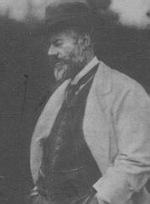
Max Weber's career (1864-1920) was intertwined with one of the most fruitful periods of German science, while also coinciding with times of intense political crisis. Both perspectives are reflected in his work. Having studied law, history, economics, and philosophy at the universities of Heidelberg and Berlin, Weber pursued an academic career, taking up the regular chair of economics at the University of Freiburg in 1895. His involvement in the political and social affairs of the newly established German Empire developed alongside his scientific perspective. The beginning of the twentieth century found Weber engaged in methodological work, as well as in thorough studies of the sociology of religion, from which perhaps his most famous work, "The Protestant Ethic and the Spirit of Capitalism" (1905), emerged. In the decade leading up to the First World War, he became involved in sharp political debates concerning the direction of the German state, opposing various political entities, from the nationalist Pan-German League to the Social Democratic Party. Simultaneously, since 1909, he had taken on the editorial role for the collective work "Basic Outline of Social Economics," for which he drafted the fundamental conceptual framework of the then "young" science of sociology.