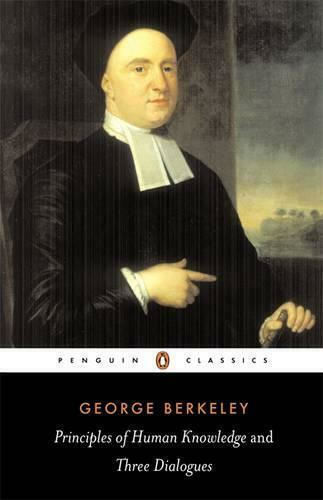
George Berkeley
George Berkeley was born in 1685 in Kilkenny, Ireland, to a family of English descent. He began his studies at the age of 15 at Trinity College, Dublin, and after graduating, he became a fellow of the college, equivalent to a modern-day researcher. Concurrently, he was ordained as a priest, as was customary for college fellows. Although he lived until 1753, his significant philosophical works were written between the ages of 20 and 23. First, in 1709, he published "An Essay Towards a New Theory of Vision," where he advocated an empirical theory of visual perception. The following year, he released "A Treatise Concerning the Principles of Human Knowledge," a work for which he would become famous, arguing that external objects are a collection of mental ideas that do not require the existence of matter. In 1713, he presented these ideas in a dialogical form in "Three Dialogues between Hylas and Philonous," where he explained the main points of his theory. During this time, he also traveled throughout Europe. He returned to Dublin in 1721 and unexpectedly inherited a large fortune in 1724. Inspired by new discoveries, he conceived a plan to educate the "native" inhabitants of the American continent. He left in 1728 with promises of government funding, which were never fulfilled, and was forced to return from Rhode Island to Ireland in 1731. His later works include "Alciphron," an apologetic work for the Christian faith in dialogical form, "The Theory of Vision Vindicated and Explained" in 1733, and "Siris" (1744), an attempt to address a wide range of philosophical and theological issues on a large scale.
Beyond his philosophical pursuits, Berkeley's activities after his return included his ecclesiastical duties as the Bishop of Cloyne in Ireland (from 1734 to 1752). He passed away peacefully in 1753 in Oxford and is considered to this day one of the principal figures of British empiricism.