Doris Lessing
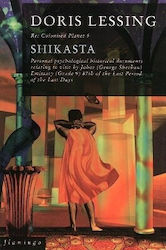
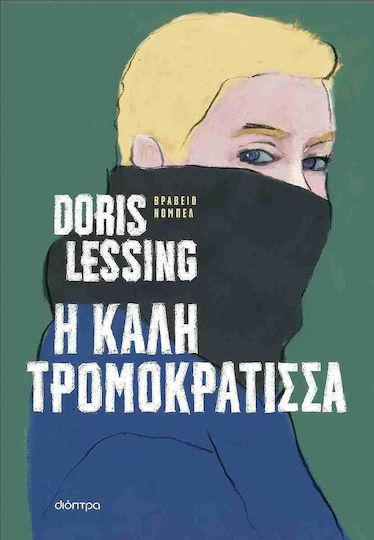
Doris May Tayler (Kermanshah, 1919 - London, 2013), known by her maiden name Doris Lessing, was born in Persia (modern-day Iran) to English parents. At the age of five, she moved with her parents, a former bank clerk and a nurse, to Southern Rhodesia (now Zimbabwe), a region torn by racial discrimination (her brother was a racist, as she herself recounts). Having spent her childhood on a farm in the country, she left school and her family home at the age of 14, taking on various jobs to make a living and participating in leftist organizations. Before settling in England in 1949 with her youngest son, she had already been married twice—first to a young civil servant at the age of 17, and then to German communist Gottfried Lessing—and had two children from her first marriage and one from the second. Her first novel, "The Grass is Singing" (Greek translation: "Τραγουδάει το χορτάρι", Gnosis, 1984), published in 1950, deals with a "tragedy that mixes love with hate, set against the backdrop of irreconcilable racial tensions in Africa." The book achieved significant success in Britain, the United States, and was translated into many European languages. Between 1952 and 1956, she was a member of the British Communist Party ("we were all communists then," she would later say), but she left after the events in Hungary in 1956. As an author, she was distinguished not only for her novels but also for her essays and short stories. She was awarded the Somerset Maugham Award for her short story collection "Five." In 1981, she received the Austrian State Prize for European Literature, and in 1982, the Shakespeare Prize of the German Democratic Republic. Among her most famous novels is the five-volume series "Children of Violence," which describes the journey of the central character (Martha Quest) through the 20th century up to the third world war—"Martha Quest" (1952), "A Proper Marriage" (1954), "A Ripple from the Storm" (1958), "Landlocked" (1965), "The Four-gated City" (1969)—, "The Golden Notebook" (1962), described by the Swedish Academy as "a 20th-century book that marked the way we view male-female relationships," "The Summer Before the Dark," "Memoirs of a Survivor," among others. Her short stories were included in collections such as "To Room Nineteen" and "The Temptation of Jack Orkney," while her African stories were featured in collections like "This Was the Old Chief's Country" and "The Sun Between their Feet." In 1979, "Shikasta" was published, the first in a series of five science fiction novels under the general title "Canopus in Argos: Archives." Her novel "The Good Terrorist" was awarded the W. H. Smith Literary Award in 1985. Doris Lessing never ceased to view writing as intertwined with her political commitment to human rights and women's rights. "I think you start to change society with literature, and then, when that doesn't happen, you have a sense of failure," she once remarked. Then you wonder: why did I feel that I would change society? And so you continue...", she says to author Joyce Carol Oates (newspaper "Ta Nea", 12.10.2007). In 2007, at the age of 88, she was awarded the Nobel Prize in Literature, according to the Swedish Academy's rationale, as an "epic author of the female experience, who with skepticism, passion, and visionary power submitted a divided culture to thorough investigation." She passed away in London on November 17, 2013, at the age of 94.


 Greek Fiction Books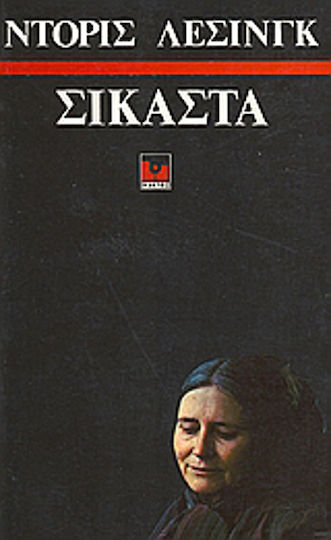
 Greek Fiction Books
 Non-Greek Fiction Books