Aleksandr Sergeevic Puskin
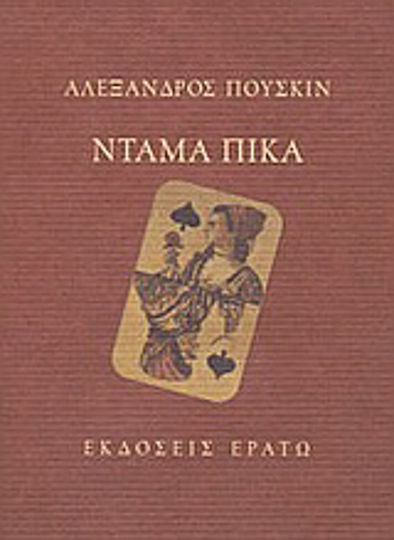
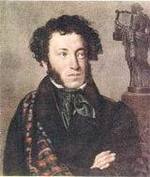
Alexander Sergeyevich Pushkin was born in Moscow on May 26, 1799, and died in St. Petersburg on January 29, 1837. His work consists of lyrical and epic poems, novels (both prose and verse), short stories, historical treatises, and critiques. Pushkin is considered not only the greatest writer of his country but also something more: the embodiment of the Russian spirit. On his father's side, he descended from one of the oldest families of the Russian aristocracy, while on his mother's side, he was a direct descendant of an Abyssinian prince. As a child, he had the opportunity to meet the greatest minds of the era, such as the historian Karamzin. In 1811, at the age of 12, he entered the Imperial Lyceum of Tsarskoye Selo, where he received a superior education. His poems from his lyceum years are varied: popular romances, patriotic verses, Ossian landscapes, verses strongly influenced by Parny and Derzhavin, letters, etc. In 1817, he attempted a major patriotic poem, "Ruslan and Lyudmila," a complex work, somewhat cold but excellent and well-structured, which established his preeminence in Russian literature. Deeply influenced by the wave of liberalism sweeping through Europe, Pushkin systematically engaged with political themes in his lyrical poems. In 1820, he was exiled to Bessarabia, and from his impressions of the Caucasus, many significant works were born: "The Prisoner of the Caucasus," "The Fountain of Bakhchisarai," "The Robber Brothers," and many other lyrical poems. During this period, 1820-1821, he wrote many satirical poems and "The Gabrieliad." In the summer of 1823, he succeeded in transferring to Odessa, where he began "The Gypsies" and wrote the first two chapters of the poem "Eugene Onegin," which owes its form to the influence of Byron. In 1824, he began writing "Boris Godunov," and in 1826, his exile ended, and Tsar Nicholas I warmly welcomed him in Moscow, where he stayed for only two months before returning to Mikhailovskoye, where he began his first prose work, "The Negro of Peter the Great." In 1829, he wrote "Poltava" in fifteen days, a notable poem that introduced Ukraine to Russian literature for the first time. After unsuccessful marriage proposals, he traveled to the Caucasus, from where he returned with some beautiful poems and "A Journey to Arzrum," one of his best prose works. Other works include "The Tale of Tsar Saltan" (1831), "The Queen of Spades" (1834), and others.