Sigmund Freud
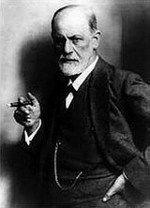
The father of psychoanalysis was born in 1856 in Freiberg, Moravia, to parents of Jewish descent. He studied medicine in Vienna. As a student of the renowned French neurologist Charcot at the Salpêtrière (1885-86), he returned to Vienna and began practicing his profession in collaboration with Breuer (1895-1897), using hypnosis to explore the mental world of his patients. The foundation of his theory on mental disorders and the technique of psychoanalysis met with hostility from the entire medical establishment. However, his clientele grew daily, and he found followers among the younger generation of doctors. In 1938, after the Nazi occupation of Austria, he fled to London with his daughter Anna. He suffered from laryngeal cancer. While working on a psychoanalytic study on "Hitler and Nazism," an attack left him bedridden, and he passed away on the night of September 23rd to 24th, 1939. His most significant works include: "Studies on Hysteria," 1895, "The Interpretation of Dreams," 1900, "On Dreams," 1901, "The Psychopathology of Everyday Life," 1901, "Three Essays on the Theory of Sexuality," 1903, "Totem and Taboo," 1913, "Introduction to Psychoanalysis," 1916, "The Ego and the Id," 1923, "Neurosis and Psychosis," 1924, "Inhibitions, Symptoms, and Anxiety," 1926, "Civilization and Its Discontents," 1930, "Female Sexuality," 1931, "Comment on Anti-Semitism," 1938, "Moses and Monotheism," 1939.