Frank Miller
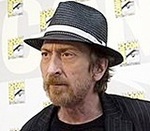
Frank Miller
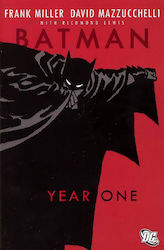
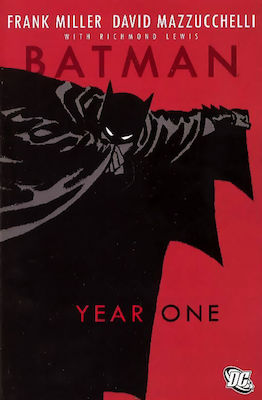
Frank Miller was born on January 27, 1957, in Olney, Maryland, and grew up in Montpelier, Vermont. He was the fifth of seven children. Miller is an American comic book and film writer, penciller, inker, film director, and actor. He is known for the dark and noir style that characterizes his comic book stories. His early work included the comic book series "The Twilight Zone," which was based on the successful television series of the same name. The comic series was published by Gold Key Comics, and Miller penciled issues 84 and 85 (June and July 1978, respectively). Later, he worked for the two American comic book giants, DC Comics and Marvel Comics. At Marvel Comics, he worked on various titles, including issues 27 and 28 (February and March 1979, respectively) of the series "Peter Parker, the Spectacular Spider-Man," where the character Daredevil made a brief appearance. At that time, Daredevil was a secondary character, and his comic series was low in sales. However, Miller saw potential in the character and requested to work on the title from then-publisher Jim Shooter. Shooter agreed, and Miller became the new penciller for the series, starting with issue 158 of "Daredevil" (May 1979). Although he initially adhered to established comic book standards, he infused the first issue he penciled with noir elements. After this issue, he became one of Marvel Comics' top artists and began creating new stories for "Daredevil" in collaboration with Roger McKenzie, the series' writer at the time. Learning from Neal Adams, Miller spent hours sketching New York City's rooftops, aiming to bring authenticity to the series' artwork, which was uncommon in superhero comics of the era. Miller's success with the series was so significant that it shifted from a bimonthly to a monthly publication. From issue 168 (January 1981) onward, Miller took full control of the series as both penciller and writer, with Klaus Janson as the inker. In issue 168, the Greek-origin mercenary ninja Elektra made her first appearance. Despite being an assassin, she became the object of Daredevil's affection. With Elektra's introduction, Miller's work on "Daredevil" began to feature darker themes and stories, culminating in issue 181 (April 1982), where the assassin Bullseye killed Elektra. While the deaths of secondary characters are common in comics, the death of a major costumed character like Elektra was unprecedented. Miller made it clear in subsequent issues that he intended to keep Elektra dead, as superhero resurrections are very common in comics. However, Elektra did return during his tenure as writer. Issue 191 (February 1983) was Miller's last on the series. During his tenure, Miller transformed a second-tier character into one of Marvel Comics' most popular figures. Additionally, in 1980, Frank Miller illustrated a short Christmas story of "Batman" for DC Comics. This was his first encounter with a character with whom his name would become closely associated, much like with "Daredevil." Frank Miller collaborated as both an illustrator and a writer with the renowned writer Chris Claremont on the mini-series "Wolverine" (September - December 1982). Miller used this series to explore and further develop the character of Wolverine, while also incorporating many manga elements into his illustrations. The immense success of the series cemented Frank Miller's value and elevated him to a star in the comic book industry. The six-issue mini-series "Ronin" (1983-1984) was his first comic for which he owned the intellectual property rights. With this series, he not only improved his illustrations and narrative techniques but also contributed to changing the landscape regarding comic creators' intellectual property rights. After "Ronin," his only published work in 1985 was issue 219 of the "Daredevil" title. In 1986, DC Comics published the four-issue mini-series "Batman: The Dark Knight Returns," written and illustrated by Frank Miller. This series depicts Batman retiring from active duty after the death of the second Robin and returning at the age of 55 to fight crime in a grim and violent future. Frank Miller crafted a tough and gritty persona for Batman, known as "The Dark Knight." This series was published the same year as the mini-series "Watchmen," written by Alan Moore, also by DC Comics. Both of these works revealed a new form of comics that included storytelling aimed at a more mature and adult readership. Frank Miller received significant attention for redefining Batman's image in the public's mind, as until then, the popular superhero retained to some extent the innocent and perhaps naive image he had in the 1960s television series. The comic "The Dark Knight Returns" significantly influenced the comic book industry as it sparked a new wave of darker characters, and along with the comic "Batman: The Killing Joke," it inspired Tim Burton's 1989 film "Batman." The volume containing all four issues of the series was a publishing success for DC Comics and continues to be published to this day, more than twenty years after its first release. During that period, Frank Miller had already returned as the writer of "Daredevil." He wrote the script for issue 219 (June 1985) and collaborated on the script with the departing writer Dennis O'Neil for issue 226 (January 1986). Following this, he worked with illustrator David Mazzucchelli. The result of this collaboration was the story "Daredevil: Born Again," which spanned seven issues (227-233, February - August 1986). In this story, Frank Miller redefined and strengthened the character of Daredevil. In this story, readers explore the hero's past and how it was influenced by his Catholic upbringing, as well as the destruction and rebirth of the true identity of the masked superhero, that of the lawyer Matt Murdock residing in Manhattan, at the hands of Daredevil's ultimate nemesis, the crime lord Wilson Fisk, known by the nickname Kingpin. Frank Miller and illustrator Bill Sienkiewicz created the comic "Daredevil: Love and War" in 1986. This story, in which the character Kingpin also disappeared, connected Daredevil's stories from Frank Miller's first tenure on the title with the "Born Again" storyline, explaining the change in Kingpin's attitude towards Daredevil. Additionally, Frank Miller and Bill Sienkiewicz created an eight-issue series for Epic Comics, a subsidiary of Marvel Comics aimed at an adult audience, titled "Elektra: Assassin." The story was set outside the regular Marvel Comics universe and offered many insights into Elektra's past. Ninjas and cyborgs played a central role in the story. Both comics received positive reviews. The comic "Elektra: Assassin" was praised for its bold storytelling, but neither it nor the comic "Daredevil: Love and War" had the same impact as "The Dark Knight Returns" and "Born Again," nor were they read by as many readers as the latter two. Frank Miller's last significant work for this period was published in the "Batman" comic series (issues 404-407) in 1987. In this particular story, titled "Batman: Year One," he collaborated with David Mazzucchelli. Here, Frank Miller presented his own version of Batman's origin. He ensured that this version aligned with the story in his masterpiece "The Dark Knight Returns." This particular story was especially popular with readers. The volume collecting the issues of the story was first published in 1988 and has been continuously reprinted since, becoming one of DC Comics' top-selling titles. Frank Miller designed the covers for the first twelve issues of the English reprints of the Japanese comic/manga series "Lone Wolf and Cub" by Kazuo Koike and Goseki Kojima for First Comics. This effort contributed to the spread of Japanese manga to the broader Western readership. During this period, Frank Miller, along with Marv Wolfman, Alan Moore, and Howard Chaykin, clashed with DC Comics regarding a proposed system for categorizing and rating comics. Frank Miller opposed the existence of such a system, viewing it as censorship. As a result, he refused to collaborate with DC Comics again and decided to publish his new works through the independent publisher known as Dark Horse Comics. Since then, Frank Miller has been a strong advocate for the intellectual property rights of comic creators and the abolition of censorship against the medium. After announcing his intentions to publish his new creations through Dark Horse Comics, Frank Miller completed one last story for Epic Comics, titled "Elektra Lives Again." The script and artwork were undertaken by Frank Miller, while the coloring was done by his long-time collaborator, Lynn Varley. The story revolved around Elektra's return from the world of the dead and Daredevil's quest to find her. This comic marked the first example of a new artistic style by Frank Miller and was indicative of his intention to experiment with new narrative techniques. In 1990, Frank Miller and Geof Darrow began work on the comic "Hard Boiled," a three-issue mini-series characterized by significant delays between issues. This title was a mix of violence and satire and was praised for Geof Darrow's impeccably detailed artwork and Frank Miller's writing. Around the same time, the four-issue mini-series "Give Me Liberty," a collaboration between Frank Miller and artist Dave Gibbons, was published by Dark Horse Comics. This comic was a blend of action and political satire and performed well in sales, solidifying Frank Miller's reputation as a comic book writer targeting an adult audience. "Give Me Liberty" was followed by other mini-series and special editions that expanded the story of the protagonist, Martha Washington, an African-American living in present and near-future America. All issues were written by Frank Miller and illustrated by Dave Gibbons. Frank Miller also ventured into writing the screenplays for the science fiction films "RoboCop 2" and "RoboCop 3," which focused on the adventures of a cyborg police officer. Neither film received good reviews. Following this, Frank Miller declared he would never allow Hollywood to adapt his comics for the big screen, as he was infuriated by the studios' interference in his screenplay writing. Nevertheless, Frank Miller revisited the fictional cyborg in the comic mini-series "RoboCop vs. The Terminator," illustrated by Walter Simonson. In 2003, Frank Miller's screenplay for "RoboCop 2" was finally adapted by Steven Grant for Pulsaar, a subsidiary of Avatar Press. The series was titled "Frank Miller's RoboCop," illustrated by Juan Jose Ryp, and included elements shared between the two films, "RoboCop 2" and "RoboCop 3." In 1991, Frank Miller began working on his first story from the "Sin City" series, published in the comic magazine Dark Horse Presents (issues 51-62). This was Frank Miller's first work completed entirely by himself, as he wrote the script and illustrated the story in black and white to emphasize the influence of noir films on the comic. After becoming a huge success, the story was published in a volume. This first story of the "Sin City" series was re-released in 2005 under the title "The Hard Goodbye." The "Sin City" series proved to be the main work of the renowned creator for the rest of the decade, as he created other stories within the same series set in this noir world that sprang from Frank Miller's imagination. His effort to revive the genre of crime comics is notable. The mini-series "Daredevil: Man Without Fear," published by Marvel Comics in 1993, was based on an earlier script intended for a film. In this narrative, screenwriter Frank Miller and illustrator John Romita Jr. retold the origin of Daredevil in a way that differed from previous comics. Frank Miller returned to the superhero world by writing the script for issue 11 of Todd McFarlane's Spawn series, as well as the comic Spawn/Batman for Image Comics. In 1995, Frank Miller and Geof Darrow collaborated again on the title "Big Guy and Rusty the Boy Robot," which paid homage to "Godzilla" films, the character Astro Boy, and American patriotic films from World War II. The title was published by Dark Horse Comics. In 1999, the comic was adapted into an animated television series and aired on Fox Kids. During this period, Frank Miller was one of the founding members of a subsidiary comic company called Legend. Under the Legend logo, many stories from the "Sin City" series were published through Dark Horse Comics. Also, during the 1990s, Frank Miller designed covers for many superhero comics from Dark Horse Comics, which were released under the broader name Comics Greatest World/Dark Horse Heroes. In 1998, the renowned comic "300" was published, with Frank Miller as the writer and artist and Lynn Varley as the colorist. This comic, later released as a volume, narrated the story of the Battle of Thermopylae and the events leading up to it through the eyes of Leonidas of Sparta. The comic "300" was largely inspired by the 1962 film "The 300 Spartans," a movie Frank Miller saw as a child. In 2007, the comic "300" was adapted into a major motion picture by director Zack Snyder. The film was a significant commercial success. Frank Miller welcomed the new millennium with the highly anticipated sequel to "Batman: The Dark Knight Returns" for DC Comics, having set aside his past differences with the company. The story "Batman: The Dark Knight Strikes Again" was published in three issues. In 2005, Frank Miller decided to write for Batman again as he took on the role of screenwriter for the new comic series "All Star Batman and Robin, the Boy Wonder," a series whose events are set outside the regular DC Comics universe. The duties of the illustrator were undertaken by the popular and acclaimed artist Jim Lee. Frank Miller's negative stance towards film adaptations of his comics was set to change after Robert Rodriguez created a short film based on one of the stories from the "Sin City" series. Robert Rodriguez showed this creation to Frank Miller, who was so pleased with the result that he approved the production of a feature film titled "Sin City." The film was released in U.S. theaters on April 1, 2005, using the original comics panels by Frank Miller as storyboards. The next film titled "300" was based on Frank Miller's comic of the same name. The immense success of both films helped refocus public and critical attention on the work of the great creator. In 2006, Frank Miller announced that his next work related to Batman would be titled "Holy Terror, Batman!". Within the context of this story, Batman defends his hometown, Gotham City, from the attacks of the real terrorist organization Al-Qaeda. Frank Miller's beliefs against the Arab world are well-known, and he has described this particular work as a piece of propaganda. In 2006, at the Comic-Con festival in San Diego, it was announced that Frank Miller would direct the movie "The Spirit," which is an adaptation of the adventures of the titular comic character created by Will Eisner for the big screen.
0

0
 Comics
Batman The Dark Knight Returns Dc Compact Edition PB
Frank Miller, 2026, English
from10,00 € at 4 stores0

0
 Comics
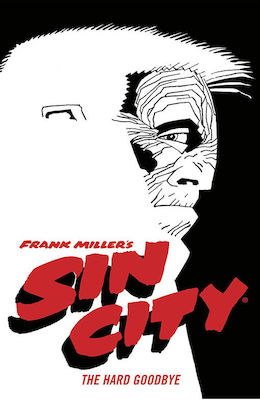
Frank Miller's Sin City, Volume 1: The Hard Goodbye
Frank Miller, 2021, English
from26,70 € at 4 stores0
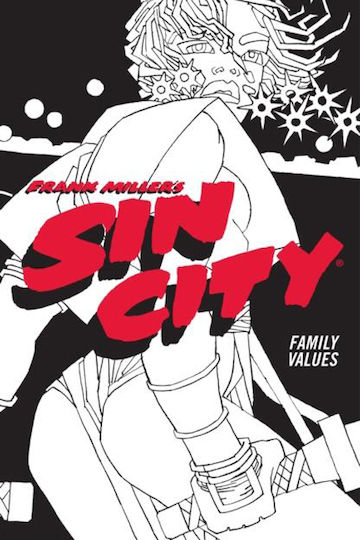
0
0
- Comics
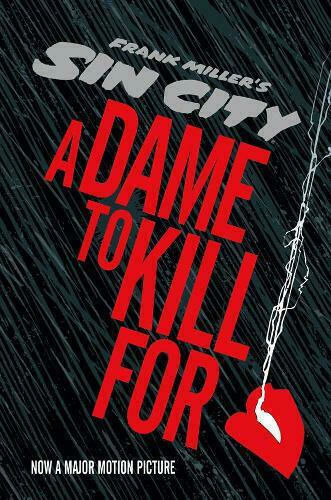
Frank Miller's Sin City, Volume 2: A Dame To Kill For
Frank Miller, 2021, English
from27,40 € at 3 stores0
0
0
0
0
0
0
0
- Manga
Marvel Masterworks: Daredevil Vol. 17
Frank Miller, 2023, Cover: Hardcover
from89,36 € at 2 stores0
- Comics
Frank Millers Sin City Volume 1: The Hard Goodbye (deluxe Edition), HARD GOODBYE DELUXE EDITION
Frank Miller, 2021, English
0
- Comics
Frank Miller's Sin City Volume 2: A Dame To Kill For (deluxe Edition)
Frank Miller, English
from112,99 € at 2 stores0
- Comics
Frank Miller's Sin City, Volume 1: The Hard Goodbye (Deluxe Edition)
Frank Miller, 2021, English
from124,60 € at 2 stores0
0
0