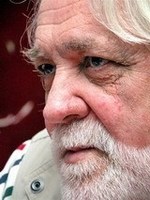
Daniel Chavarría
It is absolutely certain, albeit paradoxical, that Daniel Chavarría (Uruguay, 1933) did not write a single line in the first fifty years of his life. At the age of twenty, he boarded a ship to Spain. He traveled across Europe and worked as a dockworker in the port of Hamburg, a sailor on a Greek ship, and wandered through Italy. Upon returning to Latin America, he completed his studies in philology and worked as an actor in Montevideo. In 1964, like many leftist intellectuals, Chavarría found himself in Brazil. The military coup overthrew the democratic president Joao Goulart, and Chavarría sought refuge in Tapajós, a tributary of the Amazon, taking with him Horace's "Poems" and Ovid's "Metamorphoses." After eight months in the jungle, he ended up on the Pacific coast. There, he worked at the Duty-Free shop of the local airport and engaged in smuggling whiskey and cigarettes. At the same time, he became involved with the E.L.N., Fidel Castro's guerrilla movement. On October 27, 1969, the E.L.N. headquarters informed him that a guerrilla had defected, giving the police a list of names that included his own. He was forced to flee again. The next day, he boarded a small plane and, armed with a revolver, forced the pilot to change course to Cuba. As he himself said, "That year, there were sixty-five hijackings to Cuba." Since then, he lived in Havana, teaching ancient Greek, Latin, and classical philology. He passed away on April 6, 2018.
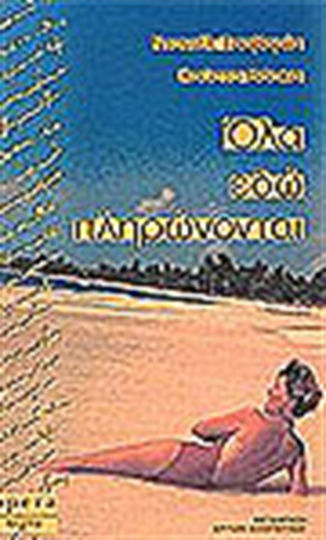
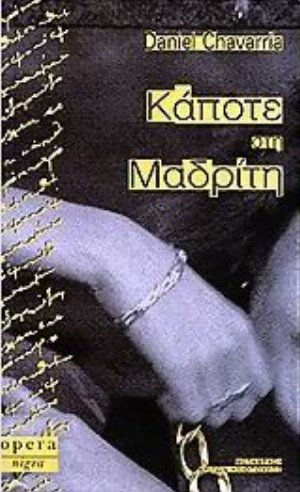
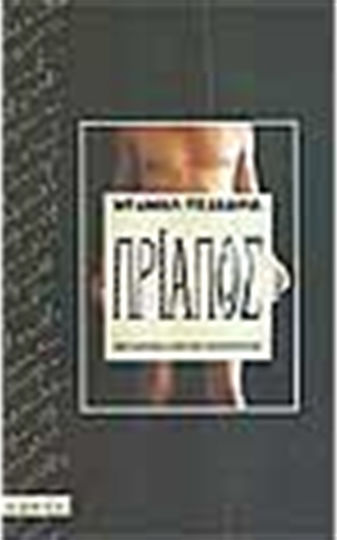
 Greek Fiction Books