Aspasia Papadoperaki

Aspasia Papadoperaki
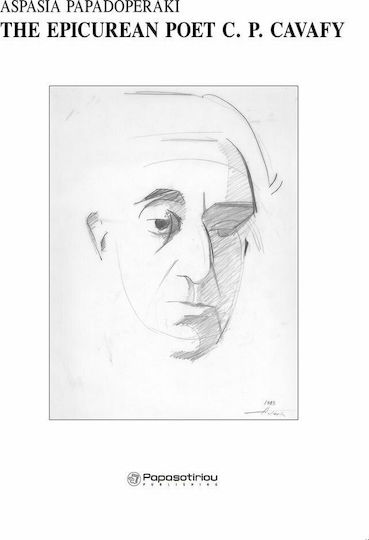
Aspasia Papadoperaki is a sculptor. She was born in 1942 in the region of Knossos. She studied sculpture at the Athens School of Fine Arts from 1966 to 1972 with a scholarship from the State Scholarships Foundation (IKY), under the guidance of professors Kalamara and scenography with Vassiliadis. From 1975 to 1978, she attended the Beaux Arts in Paris on a scholarship from EOMMEX, studying under Gilli and Cesar, and scenography at the Vincennes Theatre. Her sculpture incorporates elements from her studies of the human figure, Aegean folk architecture, and archaic sculpture. Solo Exhibitions: Some of her most significant solo exhibitions include: 1978 at Hora; 1979, in the "Ten Sculptors" exhibition at the National Gallery; 1983, at the Goethe Institute, analyzing the sculpture for Maria Callas; 1984, at Stavrakaki Gallery in Heraklion, themed "The Form of Cavafy," accompanied by a book publication of the same title; 1985, first and second editions, 2003, within the framework of Athens as the Cultural Capital of Europe and the AICA Conference, Sculptors Association "Elements in 20th Century Art from the Treasury of the Siphnians"; 1986, at the Basilica of St. Mark in Heraklion "Women in Resistance"; 1987, Exhibition at the Sculptors Association themed "Human Figure"; 1992, at the National Youth Foundation, an exhibition organized by EETE themed "Analysis of a Work"; 1996, at Astrolavos Piraeus; 2001, in Rafina, at Apollon Gallery. At Astrolavos, 2007, in Alexandria at the Hellenic Cultural Center, an exhibition for Cavafy in January 2009. Group Exhibitions: She has participated in numerous group exhibitions in Greece and abroad, such as in 1980, at the Salon de Mai, and the Alexandria Biennale the same year. She created the Maria Callas sculpture for a public space in Athens and, with a radical perspective, the compositions of the busts of Xylouris in Heraklion and Cavafy in Alexandria. Additionally, she has crafted monumental sculptures dedicated to the Women of Resistance for three villages in Crete: Skourvoula, Krousonas, and Margarikari. In the villages of Crete, she collaborates with local craftsmen in stone and shapes spaces and aesthetics. Her monumental works can be found throughout Greece, including Athens, Thessaloniki, Samothrace, the Peloponnese, Cyprus, and mainly in Crete, in Assites, at "Plastic Crete," at the Maris Hotel Conference Center, and the composition Theotokopoulos Kornaros Kazantzakis for the Pazifinia Bank. She has created her artistic Sculpture Community, which includes approximately 25 houses across Greece, where her relief and freestanding works are placed, providing a comprehensive aesthetic proposal. Her studies have been published in books, newspapers, and magazines (Archaeology, Visual Arts, Double Image, Art and Word, etc.), and she has participated in World and Panhellenic Symposia and Conferences. She has created sets, masks, and costumes for theatrical performances. In theater, she has collaborated with Yiannis Tsarouchis, V. Nikolaidis, G. Chatzidakis, Th. Kittou, and the Lyceum Club of Greek Women in Heraklion. She has books under publication: "The Treasure of the Siphnians," "The History of the Human Figure," "Measurement Systems and the Human Body." She has crafted 28 medals: for the University of Crete, G. Seferis, D. Mitropoulos, Maria Callas, and others, and has designed poets' portraits in multiple offset lithograph editions, with at least 200 copies each, many of which have been reissued and adorn public and private spaces. Since 1990, she has worked on a large series of doves, sculptures, reliefs, and jewelry. Her 1996 exhibition at the Astrolavos Gallery was dedicated to these themes. She is a member of the Association of Greek Sculptors and the Chamber of Fine Arts of Greece, where she has frequently been elected to various departments. She is also a member of the Hellenic Society for Aesthetics and the Society of Cretan Studies. She lives and works in Athens and Crete and frequently travels abroad for research and to attend sculpture conferences and symposiums, leaving her sculptural works in places such as Brittany, Lebanon, and Cyprus. In 2003, the Benaki Museum published her book "Studying El Greco." In 2009, she was awarded by the Academy of Athens for her body of work.
0
0