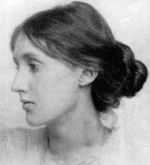
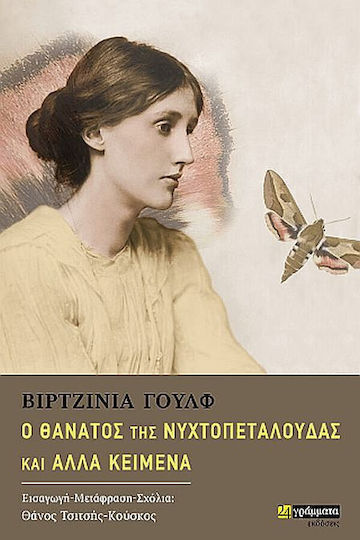
Virginia Woolf
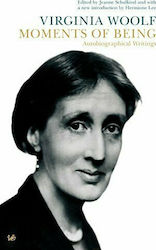
Virginia Woolf was born in 1882 in London. Her father, Sir Leslie Stephen, was a literary critic, and her mother, Julia Jackson Duckworth, was a member of the family associated with the publishing house of the same name. The death of her mother and her half-sister during her adolescence left a profound impact on her, leading to periodic bouts of depression. In 1912, she married Leonard Woolf, and together they founded Hogarth Press in 1917, which published works by T.S. Eliot, E.M. Forster, and Katherine Mansfield, as well as the first translations of Freud. She lived between London and Rodmell in Sussex, always remaining at the heart of the literary scene. She engaged in creative activities within the Bloomsbury Group, an artistic circle of her time that included many artists, writers, and intellectuals. Her literary work established her as a central figure in feminism and modernism. The fear of a relapse into mental illness led her to commit suicide in 1941.
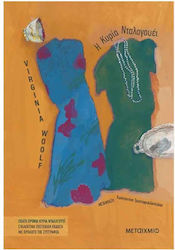
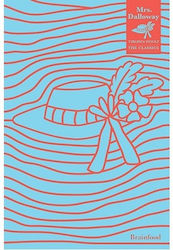
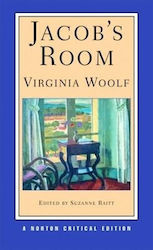
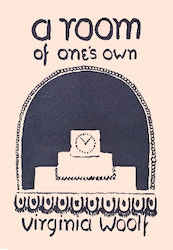
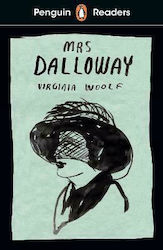
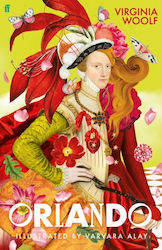
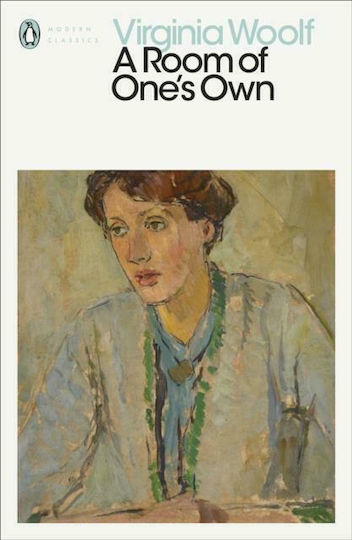
Virginia Woolf was a brilliant novelist, critic, and essayist. Her literary and social essays reveal a penetrating critical spirit. Her novels include: "The Voyage Out" (1915), "Night and Day" (1919), "Jacob's Room" (1922), "Mrs. Dalloway" (1925), "To the Lighthouse" (1927), "Orlando" (1928), "The Waves" (1931), "The Years" (1937). As an essayist and literary critic, she brought to light lesser-known writers of past centuries, as well as classics. Her major works of literary criticism were collected in two volumes titled "The Common Reader" (1925-1932). Among her feminist and other essays, notable ones include "A Room of One's Own" (1929), "Three Guineas" (1938), "Between the Acts" (1941), and "The Death of the Moth" (1942). All of Virginia Woolf's essays—more than 500—were compiled in "Collected Essays" (first edition: 1967, edited by Leonard Woolf).
Translator and literary critic Aris Berlis notes:
"Virginia Woolf is part of the great tradition of Western literature and is counted alongside Proust and Joyce in the trio of great innovative novelists who opened new paths in the European novel during the first three decades of the twentieth century. As one of the main and most combative protagonists of 'modernism' (the most significant shift in style and sensibility since Romanticism), she was fully aware that the revolution in style was a necessary consequence of a change in attitude and perspective. However, she did not overlook the fact that ultimately 'the literary historian will decide; he will say whether we are beginning now, ending, or in the middle of a great period of prose.' [...] Woolf forged her own path, indifferent to the rights of institutionalized taste, playing her dangerous games, stubbornly and consistently following her vision. Her sacred passion for form and technique—a passion manifested through continuous (and detrimental to her mental health) experimentation from novel to novel—was not a cover for inadequacies in her writing talent, nor an obsessive pursuit of the 'novel.' The pursuit of form was a pursuit of reality—a new reality that the old forms of the novel could not represent and convey." The novel, for Woolf, is not a critique of life, nor an adaptation and tidying up of its data, but a reproduction of the multiplicity of experience. Life is protean and fluid, complex and ever-changing. The novelist's job is to convey, to reproduce the myriad variations and nuances, the countless shades of experience, in their only valid reality: in their stream of consciousness.
(excerpt from the essay: "Virginia Woolf and the Novel," from the afterword of the book "To the Lighthouse" published by Ypsilon Editions).
 Greek Fiction Books
 Greek Fiction Books