Winfried Georg Sebald
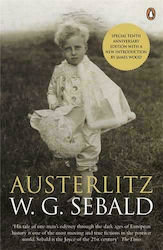
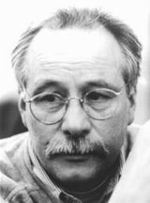
Winfried Georg Sebald (1944-2001) was born on May 18, 1944, in Wertach, Allgäu, in southwestern Bavaria. His father served in the Nazi army, was held in French captivity, and in the 1950s, he joined the German armed forces, retiring in 1971 with the rank of colonel. In 1948, the family moved to the nearby town of Sonthofen. After graduating from the Oberstdorf Gymnasium in 1963, the young Max—as he preferred to be called—studied German Philology in Freiburg. He completed his studies at the University of Fribourg in French-speaking Switzerland and the University of Manchester, graduating in 1968 with a thesis on the work of Carl Sternheim (1878-1942), titled "Judge and Victim of the Kaiser Wilhelm II Era." From 1966 to 1968, he was a lecturer at the University of Manchester, a role he temporarily left for a year to teach German at a private boarding school in St. Gallen, Switzerland. In 1970, he settled in Norwich, East England, where he taught modern German literature at the local university. In 1973, he submitted his doctoral dissertation on Alfred Döblin (1878-1957), titled "The Myth of Destruction in Döblin's Work." During 1976-77, he was an associate at the Goethe Institute in Munich, after which he returned to his lecturing duties in Norwich. In 1986, with his work "The Description of Disaster: Austrian Literature from Stifter to Handke," he was appointed professor at the University of Hamburg. In 1988, he took the Chair of European Literature at the University of East Anglia, and in 1989, he founded the British Centre for Literary Translation. The multi-award-winning author met a tragic end on December 14, 2001, when the car he was driving collided with a truck. Even before becoming well-known to the German reading public, his literary work had gained immense popularity in the USA, England, and France, and his critical work on Austrian and Swiss literature, as well as contemporary German theater, was also notable. His books have been translated into almost all European languages, and he has been honored with the Berlin Literary Prize (1994) and the Bremen Prize (2002), the Heinrich Böll Prize (1997), the Heinrich Heine Prize (2000), among others. He was also nominated for the European Literary Prize (1996). His major works include "Nach der Natur" (1988), "The Emigrants" ("Die Ausgewanderten", 1992), "The Rings of Saturn" ("Die Ringe des Saturn", 1998), "Austerlitz" (2001), "Campo Santo" (2003), among others.