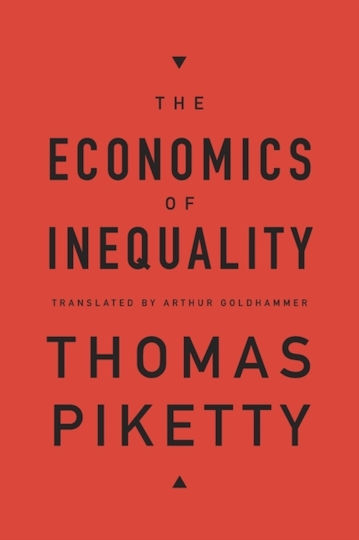
Thomas Piketty
Thomas Piketty was born in 1971 in Clichy, a suburb of Paris. He studied mathematics and economics at the École normale supérieure. In 1993, he earned his doctorate in economics from the École des Hautes Études en Sciences Sociales and the London School of Economics. From 1993 to 1995, he taught at MIT, and from 1995 to 2000, he was a researcher at the French National Center for Scientific Research (CNRS). In 2000, he was elected director of studies (professor) at EHESS, and in 2007, he became a professor at the Paris School of Economics, a new and particularly ambitious economic university in Paris founded in 2005 under the guidance of Thomas Piketty and Daniel Cohen. This institution brought together economics departments from ENS, EHESS, University Paris I, École des Ponts et Chaussées, and INRA.
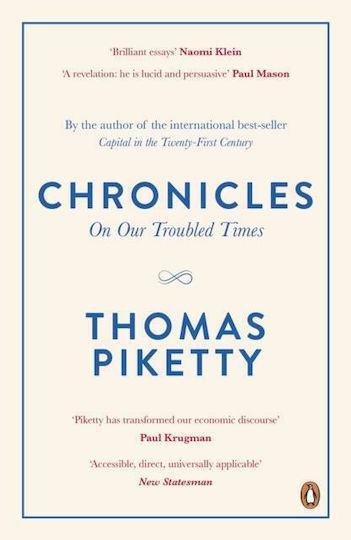
He is a regular columnist for the newspaper Libération. In 2002, he was named the best young economist in France (alongside Philippe Martin) by the newspaper Le Monde and the Cercle des Économistes. In 2013, he was awarded the Yrjö Jahnsson Award by the European Economic Association, and in 2014, he received the Prix Pétrarque essay award from France Culture-Le Monde for "Capital in the Twenty-First Century," which, especially after its tremendous publishing success in the United States, drew global attention to his work. The same book was also honored in 2014 with the Financial Times/McKinsey Business Book of the Year Award. According to Paul Krugman, "Capital in the Twenty-First Century" is "the most important book of the year—and maybe of the decade. Piketty has transformed our economic discourse; we’ll never talk about wealth and inequality the same way we used to."
Through his work, Piketty has brought the concept of equality back to the forefront of economic science. As Piketty writes, inequalities must be reduced, and the welfare state must be strengthened because this is in the interest of democracy. To achieve this, public policies regulating the market are required, as well as the use of taxation, on an international scale, as a tool for social cohesion and wealth redistribution.
 Business Books