Jürgen Habermas
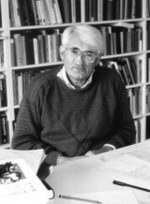
Jürgen Habermas was born in 1929 in the small town of Gummersbach, Germany. He studied philosophy at the Universities of Göttingen and Bonn. From 1956, he served as an assistant to Theodor Adorno at the University of Frankfurt, and in 1964, he succeeded Max Horkheimer in the philosophy chair at the same university, embodying the second generation of the Frankfurt School. However, he distinguished himself from his mentors by rejecting their pessimism and striving through his work to renew the discourse on democracy, enlightenment, and critical rationalism. Alongside his research activities, he contributed articles to the press and took a stand on all significant political issues of his time. In the 1960s, he was associated with the leaders of the student movement but clashed with them when he advocated for radical reformism. From 1971 to 1982, he directed the Max Planck Institute for Social Sciences and taught at the Universities of Marburg and Heidelberg alongside Gadamer. In 1982, the University of Munich refused to elect him as a professor, while the right-wing press launched a fierce defamation campaign against him. In 1983, he was re-elected as a professor at the University of Frankfurt, where he continues to teach as an emeritus professor. In 1986, he engaged in a heated debate with conservative historians who viewed Nazism as a defensive response to the rise of communism. In recent years, through both his books and articles, he has focused on the relationship between the universality of human rights and multiculturalism, the crisis of the nation-state, globalization, as well as issues of bioethics, racism, immigration, and European integration.