Federico Lorca
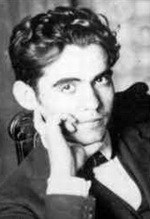
Federico García Lorca was born on June 5, 1898. His father was a wealthy landowner, and his mother was a teacher. From the early months of his life, he suffered from a severe illness, which left him with a slight limp. He spent his childhood in his birthplace: Fuente Vaqueros, Granada. Lorca attended the University of Granada, where he studied Philosophy and Law while also taking guitar and piano lessons from Manuel de Falla. In 1918, he moved to Madrid. He stayed at the Student Residence, where he had the opportunity to meet Luis Buñuel, Salvador Dalí, Miguel de Unamuno, and others.
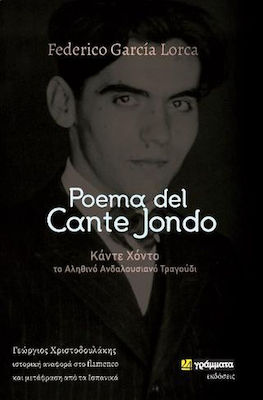
In 1920, his play "The Butterfly's Evil Spell" premiered in Madrid. That same year, he enrolled in the Faculty of Philosophy, and the following year, his first poetry collection, "Book of Poems," was published in Madrid, while he simultaneously wrote "Poem of the Deep Song." In 1922, he gave a lecture on the deep song (a traditional Andalusian folk song) and organized the "Festival of Deep Song" with de Falla. Together with de Falla, he also organized performances of the "Andalusian Puppet Theatre of Cachiporra."
In 1925, Margarita Xirgu's troupe staged "Mariana Pineda" in Barcelona, with sets designed by Salvador Dalí. In 1928, he and his friends from Granada published the magazine "El Gallo" ("The Rooster"), where his one-act plays "The Maiden, the Sailor, and the Student" and "The Walk of Buster Keaton" were published. That same year, he published the first part of "Gypsy Ballads," featuring poems from 1924-1927. After his travels to New York and Cuba, Lorca returned to Madrid in 1930, where his play "The Shoemaker's Prodigious Wife" was staged at the Teatro Español.
Following the proclamation of the Republic in Spain, Lorca published "Poem of the Deep Song" and, in 1932, founded and directed the university theater troupe "La Barraca" ("The Shack") with Eduardo Ugarte. The troupe toured the Spanish provinces, presenting works of classic Spanish theater.
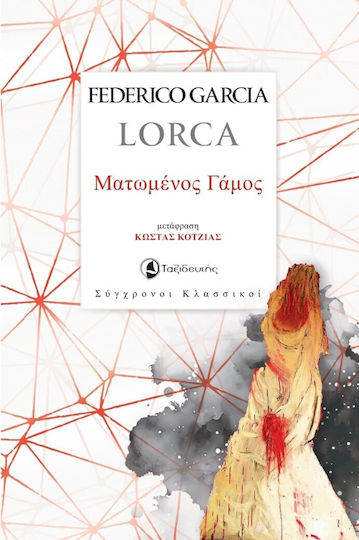
In 1933, his plays "Blood Wedding" and "Don Perlimplín" premiered in Madrid, and the following year, "Yerma" was staged at the Teatro Español with Margarita Xirgu. The "La Barraca" theater performed in South America, and Lorca wrote "Lament for Ignacio Sánchez Mejías." The following year, his plays "The Puppet Play of Don Cristóbal" and "Doña Rosita the Spinster" were performed. In 1936, Lorca read the declaration of Spanish writers against fascism in Madrid during a tribute to the poet Rafael Alberti. On July 16, he left for Granada. The next day, Franco's coup erupted, and three days later, the Falangists seized Granada. On August 3, Lorca's brother-in-law, Montesinos, the socialist mayor of Granada, was arrested and executed. Lorca sought refuge in the house of his friend, the poet Luis Rosales, whose brothers were Falangists. He was arrested on the night of August 17-18 and held at the Government Building of Granada. At dawn on August 19, he was executed in the village of Víznar.