Saul Bellow
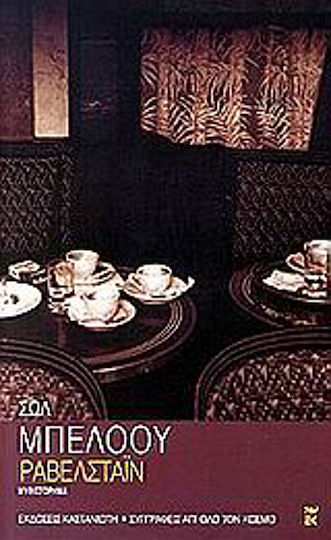
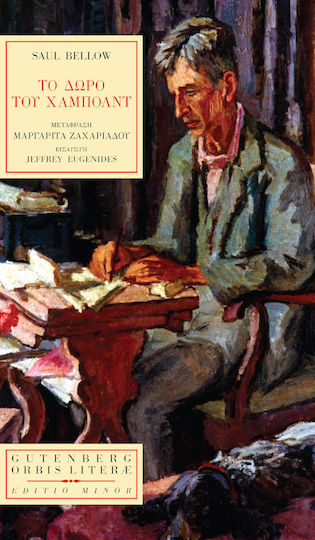
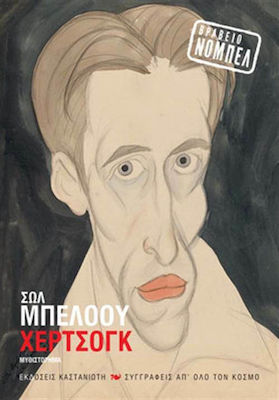
Saul Bellow (1915-2005) was born in Lachine, Quebec, to immigrant parents from Russia, and grew up in Montreal and Chicago, where his family permanently settled in 1924. He studied sociology and anthropology at Northwestern University. During World War II, he served in the American Merchant Navy. Throughout his life, he combined an academic career with literary activity. He lived in Europe for many years. He was awarded the National Book Award for the novels "The Adventures of Augie March" (1953), "Herzog" (1964), and "Mr. Sammler's Planet" (1970). He also received the National Medal of Arts for his novella "Seize the Day" (1956) and the Pulitzer Prize for the novel "Humboldt's Gift." In 1976, he was awarded the Nobel Prize in Literature "for the human understanding and subtle analysis of contemporary culture that are combined in his work." In 1984, he was made a member of the French Legion of Honor, and in 1990, he received the National Book Foundation Medal for his contribution to American letters. Other works include: "Dangling Man" (1944), "The Victim" (1947), "Mosby's Memoirs and Other Stories" (1968), "Theft" (1990), his last major novel, "Ravelstein" (2000), and many plays, short stories, and critical essays. Bellow is considered one of the most important representatives of Jewish American literature and one of the great writers of the 20th century. His works deeply influenced post-war American literature. His characters—Augie March, Moses Herzog, Arthur Sammler, among others—form a wonderful gallery of insecure, humorous, charming, demythologizing, neurotic, and at the same time intelligent observers of contemporary American life. In 1993, he left his beloved Chicago "because he could not pass by the houses of his deceased friends" and because the city was permeated by a "heavy racist climate." A year later, he nearly died from food poisoning. He passed away from old age on April 5, 2005, "retaining the sharpness of his mind until the end," as a close friend said.


 Greek Fiction Books
 Greek Fiction Books
 Greek Fiction Books
 Greek Fiction Books
 Greek Fiction Books