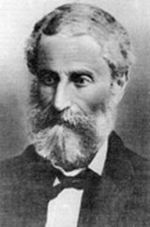
Andreas Laskaratos
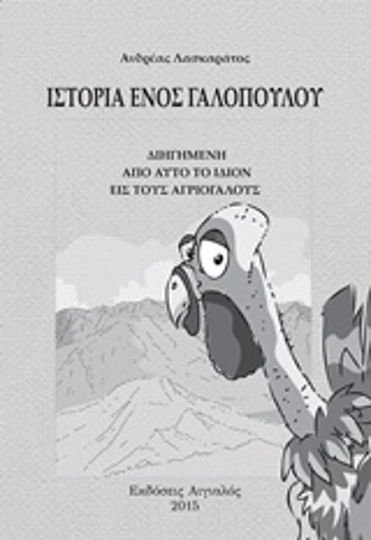
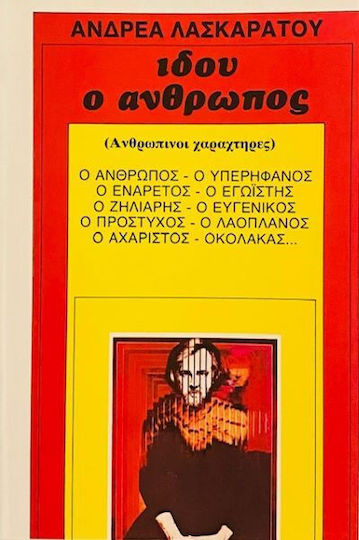
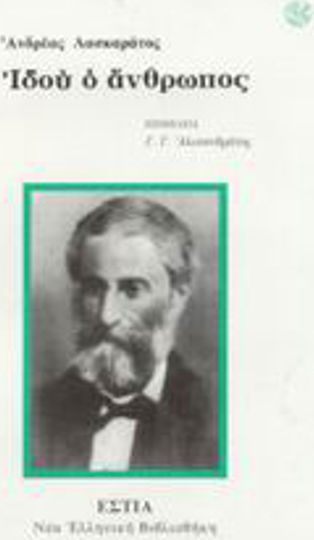
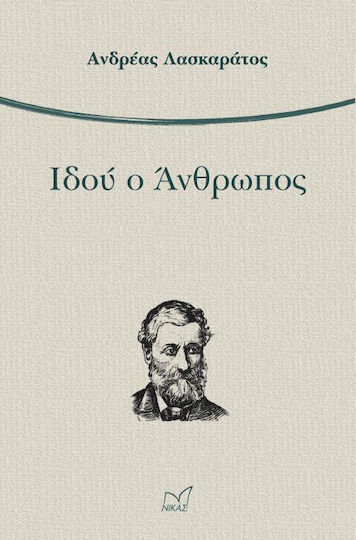
Andreas Laskaratos (1811-1901). Andreas Typaldos Laskaratos was born in 1811 in Kefalonia. His family belonged to the old aristocratic families of the Ionian Islands. His father, Gerasimos, hailed from Naples and possessed significant wealth and political influence. Andreas's first teachers were Eugene Diogenes and Spyridon Trecas. At the age of twelve, he moved to Argostoli, where he stayed at the house of his uncle, Count Delladetsina. There, he learned Italian and ancient Greek from Iacopo Baptista Bartolozzi and Neophytos Vamvas, respectively. In Argostoli, he also met Lord Byron. He then attended the School of the Castle and in 1828 went to Corfu, where he was introduced to Italian satire and literature by Vincenzo Nanunci, a poet of the Solomos Circle and an advocate of the simple language. There, he also met Andreas Kalvos, of whom he was a student, as well as Vilaras. However, his acquaintance with Solomos was decisive, as Laskaratos submitted poems and translations to him and was encouraged to continue writing. He studied law at the Ionian Academy and worked as an assistant in the Secretariat of the Ionian Senate and the Peace Court of Kefalonia. In 1836, he left for Paris, where he stayed until 1839, then moved to Pisa. There, he obtained his law degree, came into contact with the liberal ideas of the time, and wrote his first poems. He returned to Kefalonia at the age of 30 and was appointed President Judge in Lixouri, a position from which he soon resigned. In 1844, his father passed away, and Andreas took over the management of his estate. During the same period (1845), he traveled to Crete to explore its folk culture but returned disappointed, having collected only a few songs, which he published in the family magazine "Lichnos," which he launched in 1859 and published only 49 issues until it closed in 1868. On his way to Crete, he stopped in Athens, where he published his work "Lixouri in 1836," an imitation of Al. Tassoni's poem "La secchia rapita." From Crete, he returned to Kefalonia and married Penelope Kargialenia, the daughter of a prominent merchant from Livorno, who was a faithful companion and supporter. In 1850, he participated in the elections for the Ninth Parliament as an opponent of the liberal party, but he failed and moved with his family to Argostoli. In 1856, he published "Mysteries of Kefalonia, or Thoughts on Family, Religion, and Politics," which sparked reactions, led to his excommunication, and endangered his life. He fled to Zakynthos, faced difficulties again, and eventually sought refuge alone in London. There, he broadened his knowledge and wrote "Response to the Excommunication," a work published twelve years later. His correspondence with his wife is indicative of his psychological state during that period. Despite facing new reactions, he continued to publish his works from Athens, Kefalonia, Zakynthos, and Corfu, until he was accused of slandering his ideological opponent and member of the official church, Lombardos, and was imprisoned for four months. His poem "Lullaby for the then Heir to the Throne" caused new reactions. His magazine "Lichnos" closed, and he was again at risk of imprisonment, but he was spared after writing a letter to the King. In 1864, he published a Poetics of the Greek Language, translated two saints' lives from English, and after the great earthquake of 1867, he wrote the History of Earthquakes. Following the publication of the Response to the Excommunication, a new trial ensued, but this time Laskaratos was acquitted. Immediately afterward, he published the work My Trial with the Synod. Due to financial difficulties, he attempted to establish a private Girls' School in collaboration with his wife, an endeavor that failed. In 1872, the Poems were published, and from 1873 to 1876, a series of pamphlets titled Our Social Condition was released. During that period, he was already known in the free Greek state and within the circle of Palamas. In 1873, he was declared an honorary member of the Byron Society and in 1877 of the Parnassus Society. In 1878, he wrote the essay The Art of Oratory and Writing, and in 1879, Behold the Man, which he published in 1886 along with a collection of characters modeled after Theophrastus and La Bruyere. In 1884, he published the pamphlet On Language and in 1889, Language. In the last years of his life, he completed the work Customs, Traditions, and Beliefs of Cephalonia, which was published posthumously, and continued to write lyrical and satirical poems. Between 1894 and 1896, he attempted a reissue of the Lamp. Shortly before his death, with the recommendation of the new Bishop of Cephalonia, Gerasimos Dorizas, his excommunication was lifted. He died in 1901 in Argostoli. Laskaratos' work is characterized by a liberal, critical, and incisive spirit, and his style often becomes intensely caustic. Consistent in his words and deeds, he was persecuted for his outspoken nature, yet he never lost his combativeness. Literary historians have described him as the main link between the Ionian and the First Athenian School. For more biographical details on Andreas Laskaratos, see Agra Tellos, "Laskaratos Andreas," Great Greek Encyclopedia. Athens, Pyrsos, 1931; Alisandratos G.G., "Andreas Laskaratos," Our Older Prose Tradition: From its Beginnings to the First World War, Vol. E, 1830-1880, pp. 278-303. Athens, Sokolis, 1996; Kostiou Katerina, "Laskaratos Andreas," World Biographical Dictionary 5. Athens, Ekdotiki Athinon, 1986; Papageorgiou Alekos G., "Laskaratos - Typaldos Andreas," Great Encyclopedia of Modern Greek Literature 9. Athens, Haris Patsis, n.d.; and Papageorgiou Alekos G., "Brief Chronological Outline of A. Laskaratos' Life," Nea Estia 70, Year LE, Christmas 1971, no. 827, pp. 134-139. (Source: Archive of Greek Writers, EKEBI).


 Greek Fiction Books