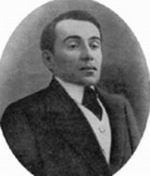
Konstantinos CHristomanos
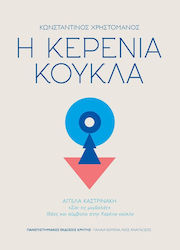
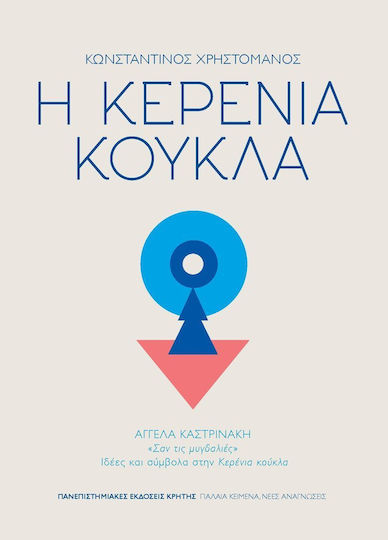
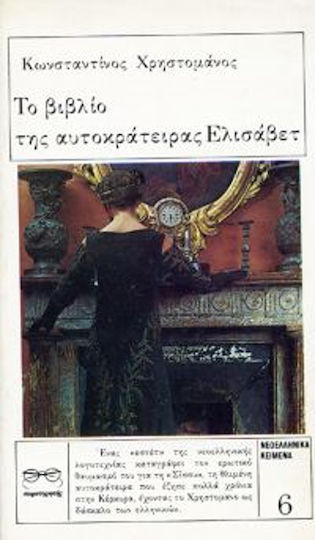
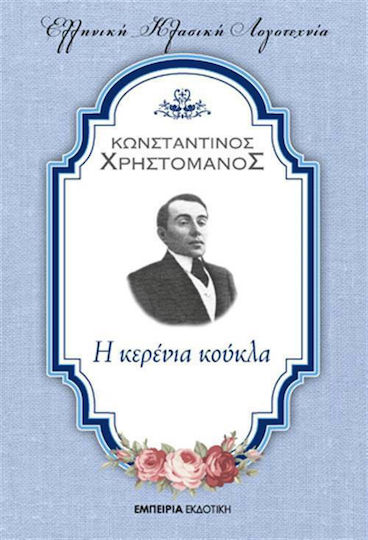
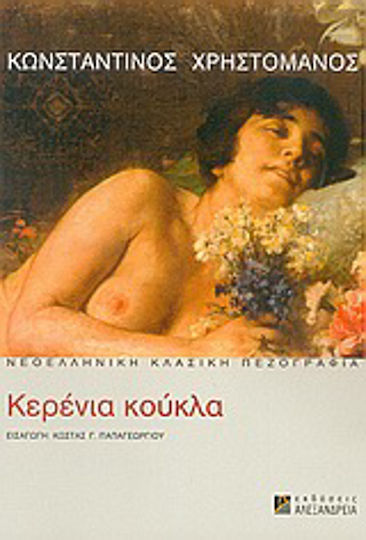
Konstantinos Christomanos (1867-1911). Konstantinos Christomanos was born in Athens, the son of university professor Athanasios Christomanos. Due to an accident in his childhood, he suffered from kyphosis, a condition that significantly affected his psyche. He initially studied at the Medical School of the University of Athens but interrupted his studies in 1887 to pursue Philology in Vienna. In 1891, he received his doctorate from the University of Innsbruck and was appointed as a Greek language teacher and companion to Empress Elisabeth of Austria, a position he held until 1893 while continuing his studies. In the summer of 1892, he converted to Catholicism during a visit to the Vatican Library, followed by five months of monastic life (from November 1892 to March 1893) at Monte Cassino. From 1895 to 1899, he remained in Vienna, where he pursued an academic career, initially as a lecturer of the Greek language and later as a professor at the Institute of Oriental Languages. He left Vienna with the title of Baron-Knight of the Order of Saint Joseph and published two works in German: the poetry collection "Orphische Lieder" and the drama "Die graue Frau," both heavily influenced by the Symbolist movement. His departure from Vienna, at a time when he was gaining recognition in literary circles, was prompted by the publication of his work "Tagebucher." Christomanos published this work after the assassination of Elisabeth by an Italian anarchist in Geneva, which displeased the court and led to his resignation from the university. He traveled to France and Italy and settled in Athens in November 1901, where he founded the "New Stage," a theater company that significantly contributed to the renewal of Greek theater (introducing the concept of the director and modern acting techniques, refreshing the repertoire by presenting works by Ibsen, Tolstoy, Turgenev, all translated by Christomanos, as well as Greek authors such as Koromilas, Anninos, Kampysis, Xenopoulos, and others. He also presented translations of ancient tragedies in the demotic language). Although the "New Stage" became an artistic landmark in modern Greek theater, it financially ruined Christomanos, forcing him to abandon his efforts in 1905 and dedicate himself to writing. In 1908, he published his work on Elisabeth in Greek, titled "The Book of Empress Elisabeth: Diary Pages" with a preface by M. Barrès, and began serializing the novel "The Wax Doll" in the newspaper "Patris," which was published as a standalone book in 1911. That same year, Marika Kotopouli's theater company unsuccessfully staged his play "The Three Kisses." He died in Athens in 1911.


 Greek Fiction Books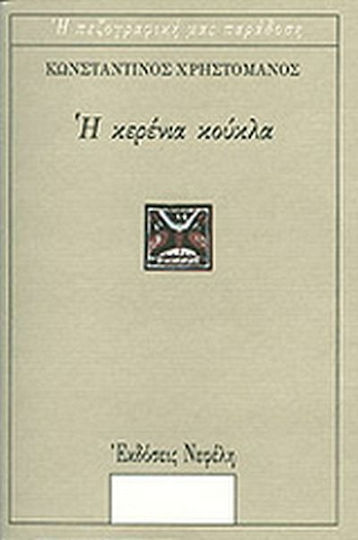
 Greek Fiction Books
 Greek Fiction Books