David Lynch
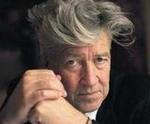
David Lynch
David Lynch was born in 1946 in the state of Montana, USA. His father was a scientist working in the field of research. Lynch studied at various American universities, specializing in Fine Arts. While still a student, he directed the short films "Six Men Getting Sick" and "The Alphabet," and he also engaged in painting—a pursuit he continues to this day. He quickly focused on cinema and enrolled at the American Film Institute's Center for Advanced Film Studies in Los Angeles, where he made the short film "The Grandmother." In 1970, due to the impression created by his short films "The Alphabet" (1968) and especially "The Grandmother" (1970), a tale about a boy who invents a grandmother, David Lynch was hired by the American Film Institute in Los Angeles. His first feature-length film was "Eraserhead," the shooting of which took four years (1972-1976). The film was shot at night since Lynch worked during the day delivering newspapers to make a living. The film is a cinematic nightmare, and in it, the director employs a series of techniques that would later characterize his style. "Eraserhead" became a success as a cult film in the midnight screening circuit, running continuously for over a year. This film also caught the attention of the well-known comedian Mel Brooks, who hired him to direct "The Elephant Man" (1980), a film that earned Lynch his first Oscar nomination for Best Director. The film received a total of 8 Oscar nominations, establishing David Lynch in the most dynamic way among audiences and critics. This black-and-white film tells the story of a horribly deformed man and is set in Victorian-era Great Britain. Rejecting the offer to direct the third episode of the "Star Wars" series, Lynch went on to direct "Dune" (1984). Based on the epic science fiction novel of the same name by Frank Herbert and produced by the well-known producer Dino De Laurentiis, the film was a major failure. In 1986, he directed "Blue Velvet." The film, considered one of the director's best, was nominated for an Oscar for Best Picture, and Lynch himself was nominated for Best Director. Many consider it one of the most representative examples of his art. The film "Wild at Heart" (1990), starring Nicolas Cage and Laura Dern, was awarded the Palme d'Or at Cannes. However, 1990 was the pinnacle of his fame, as he also distinguished himself in the field of television with the series "Twin Peaks," which he later turned into a film ("Twin Peaks: Fire Walk with Me," 1992). The narrative focused on a criminal investigation into an unsolved crime in a small town. The television series brought a new atmosphere to the stifling environment of television and quickly gained a cult following. It stars Isabella Rossellini and Dennis Hopper, with a narrative set against the backdrop of a small provincial town. The film is characterized by a dreamlike texture, surreal influences, and a direction that emphasizes eerie sounds, shadows, and vivid colors. Following this success came "Lost Highway" (1997), which moves in the same dreamlike atmosphere as his other films. A film that is a true surprise, far from his usual style, is "The Straight Story" (1998), which won the European Film Award. In this film, the main character is an elderly man who decides to embark on an adventurous journey. His next film is named after a street in Los Angeles, "Mulholland Drive" (2001), and features two young women as the central characters. For this film, he was awarded the Best Director prize at Cannes and was also nominated for an Oscar. The film titled "InLand Empire" (2006) (written in capitals as insisted by David Lynch) is a surreal experimental film, his first in digital format. It took him two and a half years to complete, and it stars familiar faces from previous films such as Laura Dern, Justin Theroux, Harry Dean Stanton, Laura Harring, as well as Jeremy Irons, Diane Ladd, Nastassja Kinski, and William H. Macy. When asked about the film, Lynch stated that it is a movie "about a woman in trouble, it's just a mystery." In addition to his role as a director, David Lynch has occasionally acted and is also involved in design and painting.


0
0