Osip Emilyevich Mandelshtam
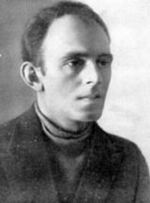
Osip Emilyevich Mandelshtam
Osip Emilievich Mandelstam (1891-1938) is one of the most tragic yet lyrical figures of early 20th-century Russian poetry. Born in Warsaw, he spent his childhood and early youth in Saint Petersburg, where his family lived, and in Petropavlovsk, where they vacationed during the summers. His father intended for him to become a rabbi and forbade him from reading "secular" books. As a result, Osip left home at the age of 14 and ended up at a higher Talmudic school in Berlin. However, instead of studying the sacred texts of the Jewish religion, he chose to engage with the works of Schiller and other 18th-century German philosophers. Little is known about Osip Mandelstam's life in pre-revolutionary Russia, with details preserved either in his autobiographical essay "The Noise of Time" or in the memories of those around him. Frequent changes of residence, likely due to his father's financial difficulties, and his attendance at a higher commercial school, one of the most progressive educational institutions of that time, are some of the images we have of Mandelstam. In 1907, he left for Paris, drawn by the allure of the French Symbolists. In 1910, he studied for two semesters at the University of Heidelberg, and in 1911, he began his studies in the Department of Romance and Germanic Languages at the Historical and Philosophical Faculty of the University of Saint Petersburg. Although he did not complete his studies, various testimonies confirm what would later become evident in his art—the fascination he had with the Greek language and history. He wrote his first poems in 1908, which are associated with the publication of the magazine "Apollon" at the end of 1909. During this period, he met N. S. Gumilyov, a friendship that lasted until his death. Simultaneously, he entered the circle of poet Vyacheslav Ivanov, who was greatly impressed by the young Osip's passion. In 1913, he self-published his first poetry collection titled "Stone" through the Akme publishing house. With the onset of World War I, Mandelstam wrote several poems influenced by the unprecedented horror of the war conflicts. In 1916, he spent some time in Crimea, where he wrote one of his best poems, "Tristia." Little is known about Mandelstam's life in the early post-revolutionary years. The only testimonies are his articles in anti-communist newspapers and pamphlets between 1917-1918. The following year, he moved from Kiev to Crimea with the White Army under General Wrangel, and in 1920, he fled to Georgia to avoid arrest by the Reds. From there, he spent some time in Moscow and Saint Petersburg, although we have no clear indications of the exact timing, only his own notes in his poems. In 1920, he settled in Saint Petersburg. In 1922, his poetry collection "Tristia" was published with the subtitle "Petrograd-Berlin." To make a living, he translated from French, German, and English. In the same year, 1922, he married Nadezhda Yakovlevna Zazina, sister of the poet Yevgeny Khazin. In 1925, his book "The Noise of Time" was published. In 1928, the first retrospective collection of his works appeared, and in the same year, his collection of essays titled "On Poetry" was published. After this year, Osip Mandelstam did not publish anything. From the late 1920s onwards, Mandelstam, along with others, began to experience the harshness of the new regime. Many of his contemporaries in the literary world, following the directives of the party hierarchy, turned against him. Many severed all contact with him, and instances of public humiliation were not uncommon. In 1934, Mandelstam was arrested on charges of writing critical verses and epigrams against Stalin and was sentenced to three years of imprisonment in the Cherdyn camp. There, he made his first suicide attempt by jumping out of the hospital window. From there, at an unknown time, he was transferred to Voronezh. There are no records of the poet's life during this three-year exile. He was arrested for the second time on May 2, 1938, and exiled to Magadan in eastern Siberia. During his transfer there, the KGB agents made him suspect that they intended to poison him. Upon arriving at the concentration camp, he began stealing food from his fellow inmates, who beat him, mocked him, and eventually forced him to eat garbage and live outside the barracks in the harsh Siberian cold. He became an emaciated figure, and despite the care of some exiled doctors, death found him in Vladivostok on December 27, 1938. We will never know the exact circumstances of his death. (Source: www.indiktos.gr)

 Greek Fiction Books
Ταξίδι στην Αρμενία
Osip Emilyevich Mandelshtam, 2008 , Indiction
from13,43 € at 3 stores0
0