Giorgos Ioannou
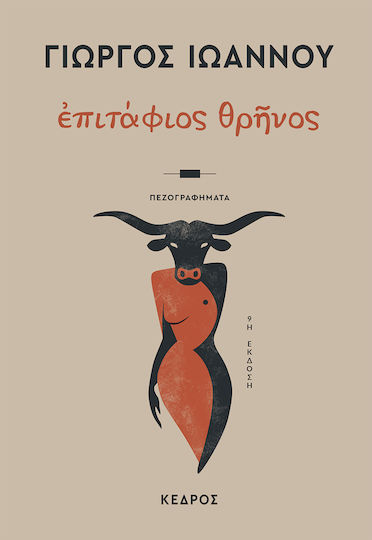
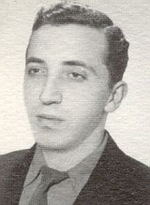
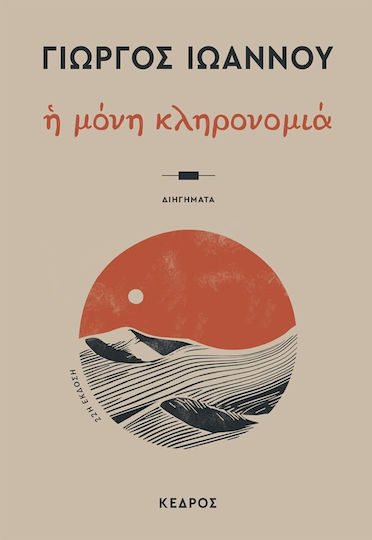
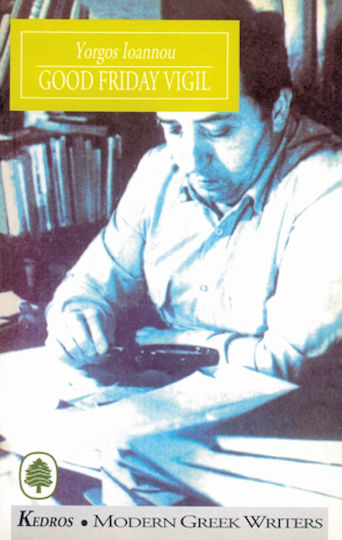
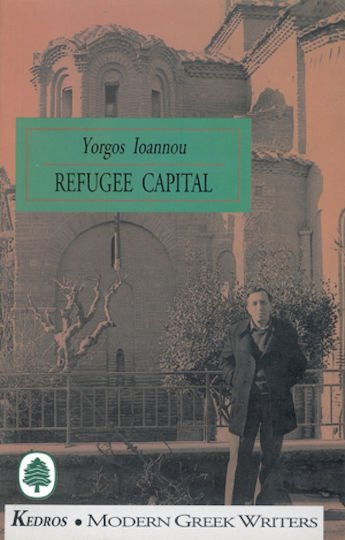
Giorgos Ioannou (1927-1985) was born in November 1927 in Thessaloniki to parents who were refugees from Eastern Thrace. He was the eldest of four children in his middle-class family. He spent his childhood and teenage years in Thessaloniki, except during the Occupation, when he and his siblings sought refuge in Chalkidiki and later in Athens to protect themselves from bombings. The Occupation period left a significant mark on his soul and frequently appears in his writing. In 1947, he enrolled in the Faculty of Philosophy at Aristotle University of Thessaloniki, graduating in 1950. He then worked briefly as a philologist and published his first poetry collection, "Sunflowers." In 1954, he was appointed as an assistant in the Department of Ancient History at the Faculty of Philosophy in Thessaloniki. However, he resigned quickly (1955) and was hired at Athens College, where he taught for a year. From 1956 to 1959, he taught in private high schools in Athens and the provinces, while also being a regular contributor to the magazine "Diagonal," where he published 18 poems in 1959. In 1960, he was appointed to public education and placed in Kynouria. In 1961, he began writing his first prose works and was seconded to Benghazi, Libya, where he founded the Greek Gymnasium. He returned from Libya to Kynouria in 1963. In 1964, he published "For a Sense of Honor," his first book of prose. After 1974, he became a key member of the committee that prepared the Anthology for elementary school children and was the presenter of most texts anthologized in Modern Greek readings for secondary education from 1975. In 1979, he was transferred as a principal to Karlovasi, Samos, but remained seconded to the Ministry of Education. In 1980, Ioannou won the first state prose award for his book "Our Own Blood." In 1985, he died from septic shock after surgery at Sismanoglio Hospital. His poetic works, besides "Sunflowers," include: "The Thousand Trees," Diagonal Thessaloniki 1963, "The Thousand Trees and Other Poems 1954-1963," Hermes, 1973. His prose works include: "The Sarcophagus," Hermes, Athens 1971; "The Only Inheritance," Hermes, Athens 1974; "Our Own Blood," Hermes 1978; "Omonia," Odysseas, Athens 1980; "Funeral Lament," Kedros, Athens, 1980; "Deposits," Orestes, Athens, 1980; "Multiple Fractures," Estia Bookstore, Athens 1980, etc. Plays: "The Hen's Egg" and "The Great Bear" (1981). Translations: Euripides' "Iphigenia in Tauris," Kedros Athens 1969; Tacitus: "Germania" (1980); "Palatine Anthology." Straton: "Child's Muse," Kedros, Athens 1980. Philological works: "Folk Songs of Kynouria," Diagonal Thessaloniki, 1965; "Our Folk Songs," Tachydromos, Athens 1966; "Magical Tales of the Greek People," Tachydromos, Athens, 1966; "Ballads," Hermes Athens 1970; "Karagiozis" (3 volumes) Hermes, Athens 1973; "Tales of Our People" Hermes, Athens 1973; "Alexandria 1916, Diary of Philip Dragoumis," Dodoni, Athens 1984. Magazines: "Leaflet," issues 1-6, 1978-1982, issues 7-8. Children's books: "Pikos and Pika," Athens 1986.

 Greek Fiction Books
 Non-Greek Fiction Books