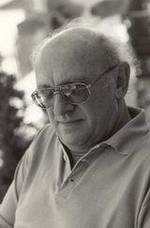
Petros Markaris
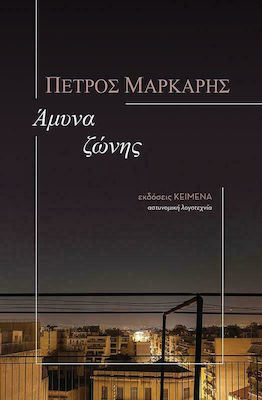
Petros Markaris was born in Istanbul in 1937. He made his debut in Greek literature in 1965 with the play "The Story of Ali Retzo." A playwright, translator, scholar of Bertolt Brecht's work, and screenwriter for Theo Angelopoulos, Markaris has written four plays and two crime novels: "Late-Night News" (1995) and "Zone Defense" (1998). These were followed by the novels "Che Committed Suicide" (2003), "Basic Shareholder" (2006), "Old, Very Old" (2008), "Expired Loans" (2010), and "Settlement" (2011), with the interlude of the short story collection "Athens, Capital of the Balkans" (2004). His novels feature the central character, Inspector Kostas Haritos, a conservative man in his fifties who enjoys reading dictionaries as a hobby. He is a diligent crime fighter starring in noir stories. Married to a quiet, simple woman and father to a romantically restless student, Haritos bears no resemblance to Agatha Christie's Hercule Poirot or Raymond Chandler's Philip Marlowe. However, he faintly resembles Georges Simenon's Inspector Maigret and is somewhat the successor to the iconic Inspector Bekas, a character by Yannis Maris, the pioneer of crime fiction in Greece during the 1950s, a significant author unknown to the global readership. Markaris's novels echo the collapse of Eastern European regimes, as some of his characters had political and economic ties with figures from those state mechanisms.
Like his contemporary Greek peers, Markaris uses crime plots to address critical issues of modern Greek reality. His novels offer a captivating topography of Athens, the sprawling metropolis where natives, economic migrants, and political refugees from neighboring countries coexist more or less harmoniously. He explores the world of bourgeois and nouveau riche, opportunists who profit from European Union subsidies, tax evaders, and shopkeepers who cautiously welcome local and foreign visitors to their islands. A screenwriter for television, with deep knowledge of journalistic, artistic, and other backstage affairs, he seeks to reveal some hidden aspects of the media world and share the humorous incidents occurring in the numerous TV channels. He also skillfully guides us through the labyrinthine world of entertainment centers, night bosses, and bodyguards, making clear insinuations against certain politicians involved in illegal activities. Markaris's storytelling is delightful, his characters vividly drawn, the situations described are realistic, and the heroes live genuine lives, all impeccably crafted from a literary perspective. Kostas Haritos, on whom he builds his storylines, despite having an anti-communist past, quickly becomes endearing to readers due to his incorruptible nature and perhaps his honest poverty, in a country where police officers are not held in high regard for many reasons, primarily political. For the detective is not merely a hero who solves crimes but also a somewhat eccentric yet ordinary Greek who is not content with just action: his fascinating wanderings through Athenian settings are accompanied by insightful observations. All these elements enhance the allure of the text, captivating the reader until the story's end. Sometimes, the author writes in a parodic manner, which is evidently due to his inclination to satirize the police force. Markaris employs a harsh and occasionally provocative humor, indicating his desire to scandalize, after first managing to engage the readers' gray matter. In conclusion, he operates with a subversive attitude, targeting the ills that plague Greece.
He was honored on August 29, 2013, with the "Goethe Medal 2013" by the German state, in a ceremony held in Weimar in the presence of Deputy Foreign Minister Cornelia Pieper, "for his outstanding contribution to the German language and international cultural relations."
Philippos Philippou, author - literary critic.
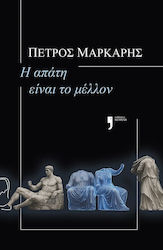
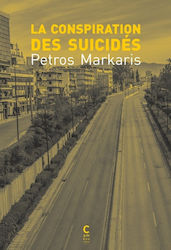
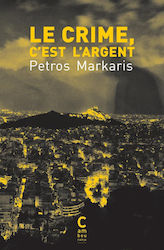


 Greek Fiction Books