Daniel Defoe
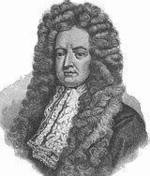
Daniel Defoe was born in 1660 in London as Daniel Foe, but he changed his name in 1695 to Defoe, adding the "De" to suggest aristocratic lineage. He pursued his education at the Presbyterian Academy of Stoke Newington. His father, a butcher and a devout man, intended for him to enter the clergy, but Defoe preferred commerce. However, he eventually abandoned this career, as he was not suited for business. He turned to journalism and politics, publishing the political newspaper "Review of the Affairs of France" between 1704 and 1714, with the support of the Earls Robert Harley and Sidney Godolphin. He also served as a secret agent for William III in Scotland and France and is considered a pioneer of economic journalism, gaining fame and prestige through these endeavors. In 1697, he wrote the satirical poem "The True-Born Englishman," in which he defended King William III of Orange while simultaneously satirizing his compatriots' obsession with racial purity.
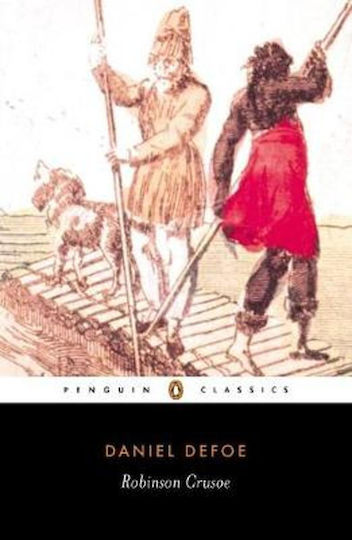
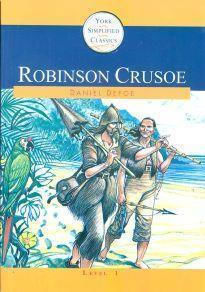
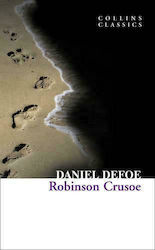
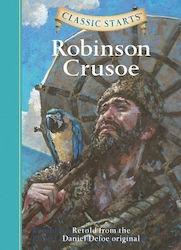
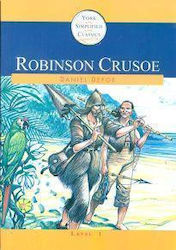
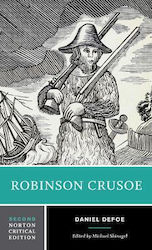
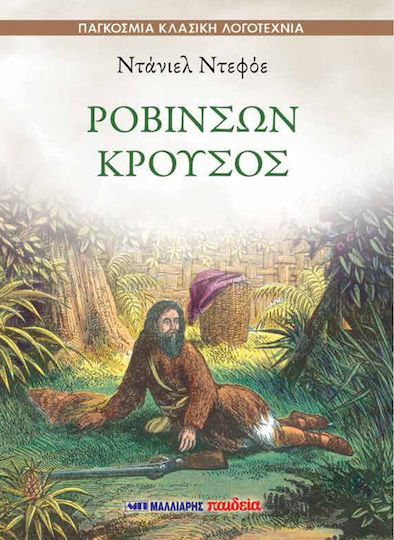
Literature captured his interest relatively late in life; he published the novel "Robinson Crusoe" in 1719, which was read as an allegory of civilization, economic individualism, and British colonialism, and had a significant impact. This was followed by two sequels by Defoe himself, "Farther Adventures" in 1719 and "Serious Reflections" in 1720. The work of Johann Wyss, "The Swiss Family Robinson" (1812), and Jonathan Swift's "Gulliver's Travels" (1726) can also be read, to some extent, as a parody of Defoe's novel. Subsequent novels included "Captain Singleton" in 1720, "Colonel Jack," "Moll Flanders," and "A Journal of the Plague Year" in 1722, as well as his last novel, "Roxana: The Fortunate Mistress," in 1724.
Daniel Defoe was a prolific writer, with approximately 545 works to his name, covering a wide range of topics including politics, geography, economics, commerce, religion, law, psychology, parapsychology, travel, and satire. These include "An Essay upon Projects," proposing socio-economic reforms in 1697, "The Storm," a chronicle of the London storm in 1704, "Appeal to Honour and Justice" in 1715, "The Family Instructor" in 1715, "Religious Courtship" in 1722, "The Complete English Tradesman" in 1726, "The New Family Instructor" in 1727, "The Great Law of Subordination Considered" in 1724, "Everybody's Business is Nobody's Business" in 1725, "The Political History of the Devil" in 1726, "A System of Magick" in 1726, "An Essay on the History and Reality of Apparitions" in 1727, "A General History of Discoveries and Improvements" in 1727, "Atlas Maritimus and Commercialis" in 1728, as well as the travel chronicle "A Tour thro' the Whole Island of Great Britain" from 1724 to 1727. He died in 1731 from lethargic fever. Literary theorists consider him one of the first novelists in the modern sense and a pioneer of the genre in Great Britain.
 Greek Fiction Books