Giannis Tsarouchis
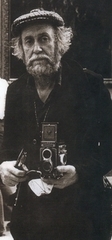
Giannis Tsarouchis
Yannis Tsarouchis (Piraeus 1910 - Athens 1989) was a painter. He studied at the Athens School of Fine Arts (1929 - 1935) and apprenticed with F. Kontoglou (1931 - 1934), who introduced him to Byzantine painting. He also studied folk architecture and costume. Alongside Pikionis, Kontoglou, and Angelos Hatzimichalis, he championed the era's demand for the Greek identity in art. In 1935 - 1936, after visiting Constantinople, he traveled to Paris and Italy, where he encountered Renaissance and Impressionist works. He discovered the work of Theophilos and met artists such as Matisse and Giacometti, among others. In 1938, two years after returning to Greece, he held his first solo exhibition at the Alexopoulos store on Nikis Street in Athens. In 1940, he was drafted and served in the Engineering Corps. In 1947, he held two solo exhibitions featuring watercolors and theatrical sketches. In 1951, he exhibited in Paris and London, and in 1953, he signed a contract with the Iolas Gallery in New York. In 1956, he was nominated for the Guggenheim Award and participated in the Venice Biennale in 1958. In 1967, he settled in Paris. In 1982, he opened the Y. Tsarouchis Museum in Maroussi at his home, which he converted into a museum, donating his personal collection of works. The Tsarouchis Foundation also operates to promote the painter's work. He collaborated with the Dallas Civic Opera in Texas, La Scala in Milan, Covent Garden, the National Popular Theater of France, and the Teatro Olimpico in Vicenza. In 1977, he staged Euripides' "The Trojan Women" in his own modern Greek translation, with his own direction and set design. He also worked on book illustration, translation, and writing books on art. After a long stay in Paris, he returned to Greece in 1980, where he passed away in 1989. Yannis Tsarouchis was perhaps the most distinguished representative of the visual arts generation of the '30s, striving to blend the demands of "Greekness" with the idiom of "modernism." As a painter of the passions of the body, he undermined the bourgeois aesthetic of the 1950s. Later, he turned to a more Western style of painting. Beyond his visual art, he will be remembered as the foremost Greek set designer. The difference between Tsarouchis and the internationalism of the '60s generation lies mainly in that he acted as an heir to a vibrant culture, while others followed a cultural model that had not yet taken shape. His work materials included the simple color palette of Polygnotus and the strictly elegant line of Byzantine icons. As a result, he revived tradition in a graceful manner through his works, expressing a strong plastic instinct. With his wide range of artistic activities, he shaped the aesthetics of post-war Greeks more than anyone else. (Source: Papyros Larousse Britannica Encyclopedia)
0