Varlam Shalamov
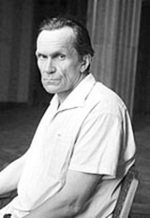
Varlam Shalamov
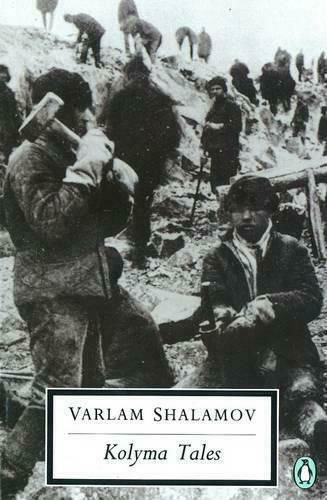
Varlam Tikhonovich Shalamov was born on June 18 (July 5 in the old calendar) in 1907, in the provincial town of Vologda in northern Russia, equidistant from Moscow and St. Petersburg, the two capitals of the Russian Empire at the time. His father, Tikhon Nikolayevich, was a prominent figure in the town, serving as both a priest and a social activist. He supported relations with exiled revolutionaries, delivered fiery speeches against the Black Hundreds movement, and fought for the education and cultural enlightenment of the common people. He spent nearly eleven years in Alaska as an Orthodox missionary, a man of European culture and open-mindedness, which naturally caused him various problems. The world of youth, poetry, and hope for Varlam Shalamov was shattered as easily as the enormous double-headed eagle was removed from the pediment of the Vologda Boys' Gymnasium, where the author studied from 1914 to 1918. In 1923, Shalamov completed his studies at a secondary technical school. In 1924, he left "the city of his youth," the home where he was born and raised, forever. In 1926, Shalamov was admitted to the Soviet Law School at Moscow University. He actively participated in the events of 1927, 1928, and 1929 on the side of the Opposition. On February 19, 1929, he was arrested for distributing leaflets of "Lenin's Last Testament." Shalamov was sentenced to three years in a labor camp and was sent to the Vishera camp in the northern Ural Mountains. On January 12, 1937, Shalamov was arrested again as a "former supporter of the Opposition" and sentenced to five years of imprisonment in labor camps for "counter-revolutionary Trotskyist activities," involving particularly harsh manual labor. In 1943, he received a new sentence for anti-Soviet propaganda: he had called Ivan Bunin, who had fled abroad, a "great Russian classic writer." His acquaintance with the camp doctors proved lifesaving. With their help, he studied at a nursing school and worked at the central hospital for prisoners until his release. He returned to Moscow in 1952, but the authorities denied him residency, forcing him to return to the Kalinin region, where he worked as an employee at a peat production factory. Shalamov was rehabilitated as a victim of Stalinist terror in 1954. Thereafter, his solitary life was dedicated to writing. Fate was not kind to Shalamov. "Kolyma Tales" was not published during his lifetime. Only a few of his poems appeared in some literary magazines. The regime could not forgive him; he was an inconvenient eyewitness. In the last years of his life, half-blind, deaf, and afflicted by Parkinson's disease, he lived in a Soviet Writers' Union care facility for the disabled, isolated from the world and defenseless against the inhumane Soviet repressive psychiatry, which, through the diagnoses of special medical committees, kept him hostage. Few people visited him in the last years of his life. Mainly young people, students, and writers who tried to ease the pain of Varlam Shalamov. He passed away in 1982.
-
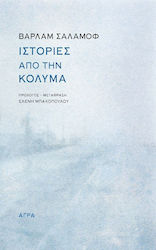
Greek Fiction Books
-
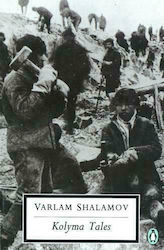
Non-Greek Fiction Books
-

All categories

Categories
0
0