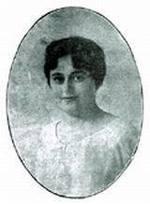
Lilika Nakou
Lilika Nakou (1904-1989). Lilika Nakou was born in the Plaka district of Athens, the daughter of lawyer Loukas Nakou and Eleni Papadopoulou, who came from an aristocratic background. Her father was a socialist and served twice as a minister under the Venizelos administration. Her mother was the sister of the writer Arsinóe Papadopoulou. Nakou attended the Hill private elementary school. At the age of twelve, her parents divorced, and she moved with her mother to Geneva, where she completed high school, took piano lessons, and studied at the Faculty of Philosophy at the University of Geneva. After the end of World War I, she moved with her mother to Paris. She studied French literature at the Sorbonne, engaged with the socialist circles of Paris through Henry Barbusse (who was associated with her father, who at that time maintained a law office in Paris), and worked for French publishers as a reader. In France, she also met Romain Rolland and Miguel de Unamuno. She returned to Greece in the early 1930s and, due to financial difficulties, worked from 1934 as a music teacher, initially in Rethymno and later in Patissia. Her father passed away in the same year. Two years later, she left teaching and devoted herself to journalism. She collaborated with the newspapers Akropolis and Ethnos (also as a foreign correspondent), as well as with magazines such as Nea Estia, Neoellinika Grammata, Philologiki Protochronia, and O Kyklos, among others. During the German occupation, she lost her mother to starvation, fell into financial destitution, was saved from starvation by the Red Cross, became active in supporting persecuted communists, and volunteered at the Rizareios Children's Hospital. After the liberation, she visited Switzerland again and traveled abroad for approximately eight years. Her health experienced significant issues even before the Papadopoulos dictatorship. In the last years of her life, she frequently visited Ikaria for therapeutic reasons. She died in Athens. Her first appearance in literature was in Paris, publishing short stories and novellas in magazines such as Monde, Clarte, and Nouvelles Litteraires. In 1928, Galatea Kazantzakis published a translation of Nakou's "Fotini" from French in the newspaper Proia. However, she became known in Greece in 1932 with the publication of the short story collection "I Xepartheni," during which time she also met Nikos Kazantzakis and entered the literary circle of Dexameni (including Varnalis, Theotokis, Kampysis, among others), through which she connected with modern Greek literature. Until then, her reading focused almost exclusively on French and Russian literature (she particularly admired Dostoevsky and Tolstoy). Lilika Nakou is placed in the realm of interwar Greek prose. Her writing is always based on her personal experiences and operates within the framework of social and psychological realism. With "I Xepartheni," she made an impression as an emerging writer, as she was one of the pioneers of writing influenced by the feminist movement. For more biographical details on Lilika Nakou, see Kokkinis Spyros, "Unpublished Biography of Lilika Nakou," Parodos 7, 4/1991, pp. 496-498, Mavroeidi-Papadaki Sofia, "Nakou Lilika," Great Encyclopedia of Modern Greek Literature 10. Athens, Haris Patsis, n.d., Nakas Thanasis, Interview with Lilika Nakou, Tomes48, 5/1979, pp. 4-15, Ziras Alex., "Nakou Lilika," World Biographical Dictionary 7. Athens, Ekdotiki Athinon, 1987, and Paris Nikitas, "Lilika Nakou," Interwar Prose: From the First to the Second World War (1914-1939) Vol. VI, pp. 184-202. Athens, Sokolis, 1993.
(Source: Archive of Greek Authors, EKEBI).
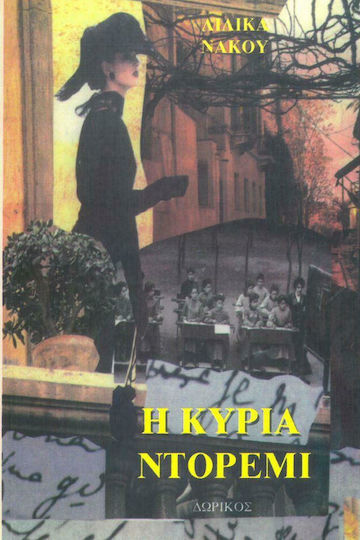
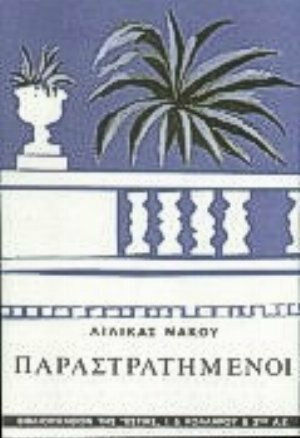 Greek Fiction Books

 Greek Fiction Books