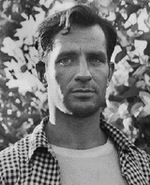
Jack Kerouac
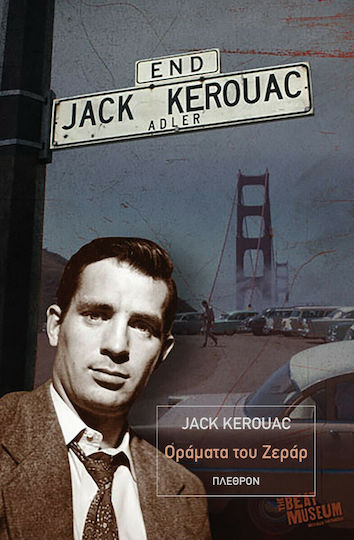
Jack Kerouac (born Jean-Louis Lebris de Kerouac, later known as Jack Kerouac) was born in Lowell, Massachusetts, on March 12, 1922, to Leo-Alcide Kerouac or Kerouac and Gabrielle-Ange Lévesque. At a very young age, he experienced the death of his brother Gerard, an event that deeply affected Kerouac and later inspired the novel "Visions of Gerard." He loved reading and showed an early inclination towards the arts, creating his own magazines, which he illustrated himself. As he grew up, he became a skilled athlete, particularly in baseball and American football, so much so that upon completing high school, he received an athletic scholarship to study for free at Columbia University in New York. There, he first encountered several future members of the Beat Generation, including Allen Ginsberg and William Burroughs. His time at Columbia was short-lived, as he broke his leg during a football game in his first year. Additionally, disagreements with his team's coach led him to abandon his studies and return to his hometown of Lowell, where he began working as a sports reporter for the Lowell Sun newspaper. After various jobs in Lowell and Boston, where he lived for a short period, he worked on merchant ships in early 1942, embarking on long voyages. The following year, he volunteered for the U.S. Navy but was discharged a few months later during World War II. The official reason for his discharge cited his psychological state and indifference. It is known that he did not strictly adhere to orders from his superiors. Later, he was allowed to re-enlist in the Navy, traveling between the U.S. and England, serving on the warship S.S. George Weens. Upon returning from England, Kerouac, along with his friend Edie Parker, became closely associated with Lucien Carr and Allen Ginsberg, then students at Columbia University, as well as with writer William S. Burroughs and Neal Cassady. During this time, in a conversation with writer John Clellon Holmes, Kerouac described his friends and his generation as being mentally exhausted with life and the world, feeling a sense of "beatness," thus introducing the term "Beat Generation" for the first time. He married Edie Parker in 1944, shortly after the imprisonment of Lucien Carr for manslaughter, for which Kerouac was considered an accomplice. His marriage lasted only a few months, ending in divorce in 1945, coinciding with the death of his father. Shortly after his father's death, Kerouac began writing his first novel, "The Town and the City," which was published in 1950. In 1949, he made his first trip from New England to San Francisco with his friend Neal Cassady and Cassady's ex-wife, Luanne. Over the next decade, Kerouac traveled extensively across America and Mexico, sometimes driving with Cassady as a passenger and other times hitchhiking. His wanderings would form the basis of his famous novel "On the Road."
In 1950, he married his second wife, Joan Haverty. The following years were a particularly creative and productive period for Kerouac. He began writing feverishly, producing his well-known novels "On the Road," based on his travels, "Visions of Cody," "Dr. Sax," "Maggie Cassidy," "The Subterraneans," and other works. Around 1955, he began studying Buddhism, initially influenced by Dwight Goddard's work "A Buddhist Bible," and became deeply involved in meditation. During a trip to Mexico, he completed his poetic series "Mexico City Blues" as well as the novel "Tristessa," written about a girl he met there. In 1956, he began writing the novels "Visions of Gerard," written about his brother, "The Scripture of the Golden Eternity," and many poems. After the publication of his book "On the Road" in 1957, he started writing the novel "The Dharma Bums." During the 1950s, and especially after the publication of "On the Road," Kerouac gained great fame, during which he gave several public readings of poetry or prose, often accompanied by jazz music, in New York. He also contributed articles to magazines such as "Playboy," "Swank," "Holiday," "Escapade," and "Esquire." In 1961, he settled in Big Sur, California, where he wrote his last semi-autobiographical novel "Big Sur." In 1966, he married his childhood friend of Greek descent, Stella Sampas, from his hometown of Lowell, and settled in St. Petersburg, Florida, with his mother. He died at the age of 47, on October 20, 1969, from internal bleeding due to cirrhosis of the liver. His wife Stella and his mother Gabrielle held a small funeral in St. Petersburg, as well as one in Lowell, at the St. Jean Baptiste Church, where he attended services as a child. He was buried in the Sampas family plot in Lowell.

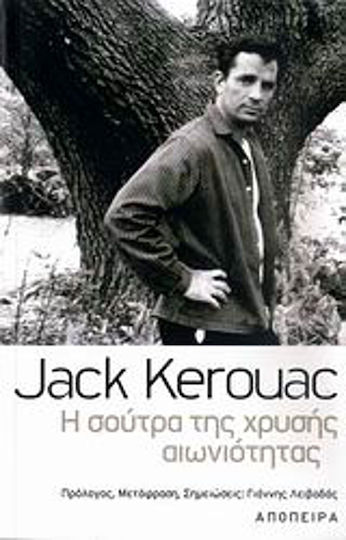 Greek Fiction Books
 Non-Greek Fiction Books