Lorentzos Mavilis
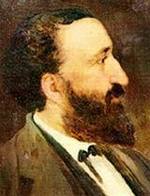
Lorentzos Mavilis
Lorenzo Mavilis (1860-1912). Lorenzo Mavilis was born in Ithaca in 1860, where his father, Pavlos, of Spanish descent, was serving as a judge. His mother, from the noble Dousmani family, spent part of her life close to the rural population of Corfu and developed a love for the local language and art, a passion she passed on to her son. A significant influence on Mavilis' personality was Iakovos Polylas, of whom he was a friend and student. He attended the Kapodistrias School in Corfu and later the Corfu Gymnasium, where he was taught by Ioannis Romanos, who made him a member of the Reading Society. After high school, he moved to Athens for university studies at the Faculty of Philosophy. In Athens, he also met Charilaos Trikoupis through Polylas. In 1879, he left for Germany, where he stayed for fourteen years. There, he studied the ancient classics and learned Italian, English, French, Spanish, and Sanskrit. In Germany, Mavilis completed his studies and received his doctorate from the University of Erlangen in 1890. In 1893, he returned to Corfu, where he joined the Corfiot School and became particularly close with Konstantinos Theotokis. He later enlisted and in 1896 became a member of the National Society. In 1897, he left for Crete to support the revolutionary movement there and ended up in Epirus leading a group of insurgents. In the 1910 elections, he gained a parliamentary seat with the Liberal Party and from this position, he fought for the establishment of the demotic language. It is also noted that Lorenzo Mavilis had a romantic relationship with the poet Myrtiotissa (Theoni Drakopoulou). In 1912, at the age of fifty-three, he participated in the Epirus campaign and was killed in the Battle of Driskos. Mavilis' work is notably influenced by Solomos, especially in his use of the demotic language and his dominant patriotic sentiment. He was also influenced by the teachings of Fichte, which he attended in Germany, and by Kant's philosophy. Among his original works, his sonnets are the most well-known, characterized by their formal completeness, and he also wrote many translations. His most famous sonnets include: "Lethe," "Kallipateira," "Olive," and "Twilight." In Mavilis' poetry, the currents of German symbolism meet the German-originated socialist spirit and his great love for his homeland. For more biographical details on Lorenzo Mavilis, see Ch.D. Gounelas, "Mavilis Lorenzo" in the "World Biographical Dictionary," vol. 5, Athens, Ekdotiki Athinon, 1986, Maria Mantouvalou, "Lorenzo Mavilis" in the "Great Encyclopedia of Modern Greek Literature," vol. 9, Athens, Haris Patsis, n.d., and Panagiotis Peristeris, "Chronology of Lorenzo Mavilis," magazine "Porphyra" (Corfu), issue 91, 7-9/1999, pp. 116-117. (Source: Archive of Greek Authors EKEBI).

 Greek Fiction Books
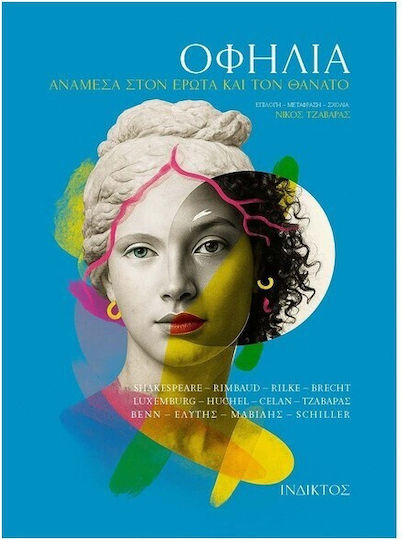
Οφηλια Αναμεσα Στον Ερωτα και τον Θανατο
Bertolt Brecht, William Shakespeare et al., 2025 , Indiction
from14,40 € at 6 stores0