Yevgeny Zamyatin
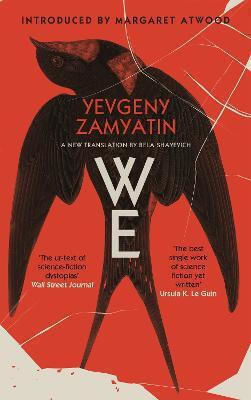
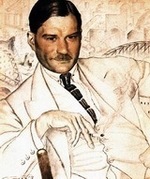
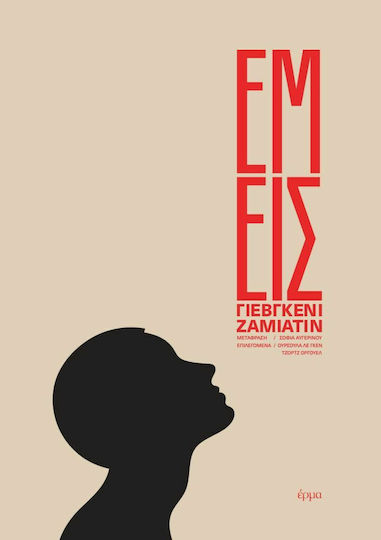
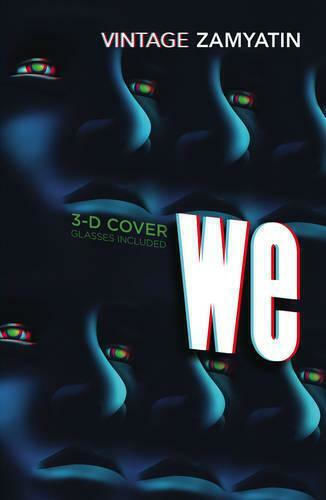
Yevgeny Ivanovich Zamyatin (February 1, 1884 - March 10, 1937) was a Russian author, best known for his 1921 novel "We," a dystopian story of the future that influenced George Orwell's "1984," Ayn Rand's "Anthem," Ursula Le Guin's "The Dispossessed," and indirectly, Kurt Vonnegut's "Player Piano." Zamyatin was born in Lebedyan, two hundred miles south of Moscow. His father was a Russian Orthodox priest and teacher, and his mother was a musician. He studied naval engineering in Saint Petersburg from 1902 to 1908, during which time he joined the Bolsheviks. He was arrested during the Russian Revolution of 1905 and exiled, but returned to Saint Petersburg where he lived illegally before moving to Finland in 1906 to complete his studies. After returning to Russia, he began writing science fiction as a hobby. He was arrested and exiled for a second time in 1911 but was granted amnesty in 1913. His work "Uyezdnoye" (A Provincial Tale) in 1913, which satirized life in a small Russian town, earned him some recognition. The following year, he was tried for defaming the military in his story "Na Kuhlihchkakh." He continued to contribute articles to various socialist newspapers. After graduating as a naval engineer, he worked in his field both in his country and abroad. In 1916, he was sent to England to oversee the construction of an icebreaker at the Walker and Wallsend shipyards while living in Newcastle upon Tyne. There, he wrote "The Islanders," satirizing English life, and its follow-up "A Fisher of Men," both of which were published after his return to Russia in late 1917. After the Russian Revolution of 1917, Zamyatin published several magazines, lectured on writing, and worked on Russian translations of works by Jack London, O. Henry, H.G. Wells, and others. Zamyatin supported the October Revolution but opposed the censorship system implemented by the Bolsheviks. His works became increasingly critical of the regime. This stance made his position very difficult. Eventually, his works were banned, and he was not allowed to publish again, especially after the publication of "We" in a Russian magazine abroad in 1927. Besides "We," Zamyatin also wrote a series of short stories in the form of fairy tales, which essentially served as satirical critiques of the Communist regime in Russia. Zamyatin was eventually granted permission to leave Russia by Joseph Stalin in 1931, after intervention by Maxim Gorky. He settled, impoverished, in Paris with his wife, where he died of a heart attack in 1937. During his stay in France, he worked mainly with Jean Renoir, co-writing the screenplay for the latter's film "Les Bas-fonds." He was buried in Thiais, France, in a cemetery on Stalingrad Street.

 Greek Fiction Books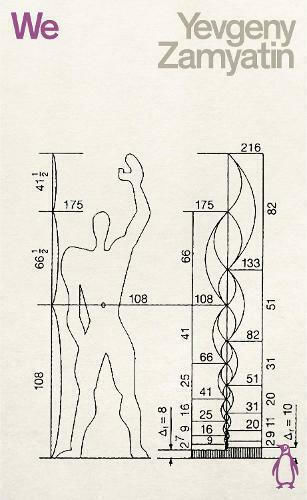
 Greek Fiction Books