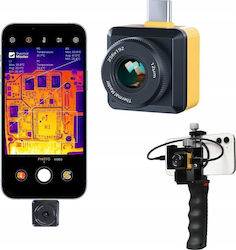
Seek Thermal Handheld Thermal Camera from -20°C to 330°C
<35mK, Compatibility: iOS
from276,96 € at 3 stores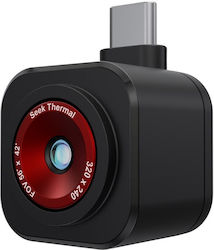
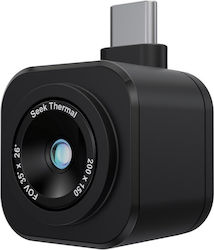
Seek Thermal Thermal Camera From -20°C To 330°C
<35mK, Compatibility: Android/iOS
from635,47 € at 2 stores
Seek Thermal Handheld Thermal Camera (from -20°C to 330°C) 320 x 240 Pixels
<35mK, IR: 320x240px, Compatibility: Android
from635,42 € at 2 stores
Seek Thermal CW-DBAX Thermal Imaging Camera Black 200 x 150 Pixels
<35mK, Compatibility: Android
from276,96 € at 2 stores

Seek Thermal SW-AAA Handheld Thermal Camera Minimum 5°C Maximum 330°C
Wi-Fi, Screen: 3.5", <70mK, IR: 206x156px, IP54
Filters
- Mobile: Thermal cameras that connect directly to a smartphone (via USB-C or Lightning). They use the phone’s screen and app to view and record thermal data, offering high portability.
- Handheld: Thermal cameras designed for one-handed use. They are lightweight, portable, and ideal for quick on-site inspections in buildings or electrical installations.
- Compact: Small and lightweight thermal cameras that are easy to carry. They are ideal for quick inspections and everyday use, as they fit comfortably in a pocket or small tool cases.


- Professional: Designed for intensive use by technicians and engineers. They offer high accuracy, durability, and advanced data analysis features for precise fault diagnosis.
- Household: Designed for simple home tasks, such as detecting heat loss and checking for plumbing leaks.
- Touch Screen: Allows quick and easy operation of the thermal camera directly from the screen. It makes menu navigation, focusing, and parameter adjustment easier with a single touch, improving work speed in the field.
- Face Recognition: Allows the thermal camera to automatically detect and recognize human faces, facilitating person identification and on-site security.
- Moisture Detection: Function that allows the thermal camera to detect temperature differences indicating the presence of moisture or leaks in walls and surfaces, helping prevent damage.
- Measures thermal sensitivity in mK. The lower the value, the easier it is to distinguish details and avoid image "blurring."
- < 20 mK to < 25 mK: The top resolution category. You can see even the slightest thermal detail with absolute clarity.
- < 35 mK to < 40 mK: Excellent clarity for professional use. Ideal for electricians, circuit board inspection, and HVAC.
- < 45 mK to < 50 mK: It offers very good performance for most everyday applications, allowing easy detection of moisture and heat loss.
- < 60 mK to < 80 mK: Found in budget cameras or smartphone add-ons. The image is grainier, but sufficient for detecting large thermal differences.
- > 100 mK: Basic category for simple use. The image loses detail if the temperatures are close.
- IP20: Protection against solid objects larger than 12.5 mm (such as contact with a hand). No protection against water ingress. Suitable for use in dry indoor environments.
- IP53: Protection against dust and water spray (rain) at angles up to 60°. It is suitable for use outdoors in mild humidity conditions.
- IP54: Protection against dust and water splashes from any direction. It is suitable for use outdoors or in industrial environments with mild humidity.
- IP65: Complete protection against dust and resistance to low-pressure water jets (e.g. rain) from any direction. Suitable for outdoor use in mild conditions.


- 0 to 290: Suitable for basic electrical inspections and building checks.
- 300 to 390: Suitable for inspecting electrical panels, motors, and industrial piping where temperatures exceed household-use levels.
- 400 to 540: Suitable for industrial applications and inspections of high-heat equipment.
- 550 to 850: Suitable for high-temperature industrial applications, such as inspections in furnaces, boilers, and metallurgical processes.
- 900 to 2200: Suitable for industrial applications of very high heat, such as metallurgy and furnace inspection.
- USB-C: It allows fast charging of the thermal camera and data transfer (images and videos) to a computer or mobile device. It is the modern connection standard for convenience and speed.
- Bluetooth: Allows wireless connection of the thermal camera to a smartphone or tablet for transferring small amounts of data, making it easier to manage measurements without the need for a local network.
- Lightning: Allows direct connection of the thermal camera to compatible Apple devices (iPhone, iPad) with a Lightning port. It turns your phone into a thermal imaging tool without the need for additional cables or adapters.
- Wi-Fi: Allows wireless connection of the thermal camera to a smartphone or tablet for image transfer, live video viewing, and remote control via a dedicated app.


- -200 to -40: Ideal for inspections at extremely low temperatures, such as in industrial cooling applications, cryogenics, or scientific research.
- -30 to -10: Ideal for inspections such as in cold storage rooms or freezing conditions.
- -9 to 0: Ideal for general building inspections and detecting losses in mildly cold environments.