- Top User Rated
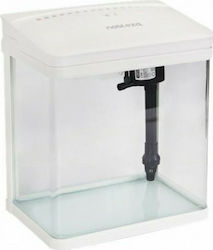
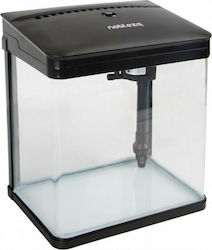

Waterbox Aquariums Peninsula Mini 25 Fish Aquarium Capacity 90lt with Filter and 60x40x40cm Black
Includes: Air pump / Filter
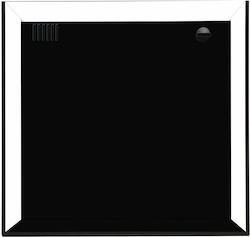
Waterbox Aquariums Cube 20 Fish Aquarium Capacity 76lt with Filter and 45x45x40cm Black
Includes: Air pump / Filter
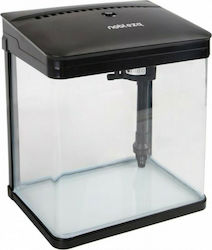

Filters
- Large 24-29 lt: Capacity from 301 liters and above. Suitable for African colorful cichlids or discus.
- Medium 17-23 lt: Capacity from 101 to 300 liters. Suitable for goldfish that require ample space and for larger fish.
- Small 10-16 lt: Capacity from 21 to 100 liters. For example, you can place about 10 guppies or 10 neon tetras in tanks of 60 liters and above.
- Mini: Capacity from 2.5 to 20 liters. Mainly suitable for plants.
- Cubic: They offer great visual depth and a symmetrical appearance (all their side panels have approximately the same dimensions). Suitable for offices.
- Panoramic: The front glass is not flat, but curves outward. This also includes those with rounded corners without vertical silicone lines.
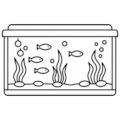
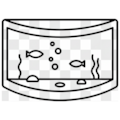
- Filter: It draws in water and passes it through sponges to trap particles, food residues, and pieces of plants.
- Heater: A temperature control device that keeps the water temperature stable. It works as a combination of a heating element and a thermostat.
- Circulator: Creates continuous flow and currents, ensuring the necessary oxygenation of the water through surface agitation. Helps with even heat distribution and better fish health.
- Air pump: External device that creates bubbles to agitate the surface of the water. This allows oxygen to enter the aquarium and carbon dioxide to be expelled.
- Thermometer: It monitors the exact water temperature and the proper operation of the heater. It ensures thermal stability, which is essential for the health and survival of the fish.
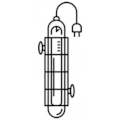
- My First Aquarium: Includes the necessary equipment, filter, heater, and lighting for immediate operation (plug & play).
- Aquascaping: Creating impressive underwater landscapes in freshwater aquariums by combining aquatic plants, stones, wood, and substrate.